

Luffa acutangula
- noun
- Specialized
- Farmers in Southeast Asia grow Luffa acutangula for both its edible young fruits and its fibrous gourds.
Examples
-
The mature fruit of the Luffa acutangula is dried and used as a natural scrubbing sponge.
-
Botanists often distinguish Luffa acutangula from similar species by its ridged, angled fruit.
-
The Luffa acutangula plant thrives in warm climates.
-
Many gardeners grow Luffa acutangulas for their delicious fruit.
-
Farmers in Southeast Asia grow Luffa acutangula for both its edible young fruits and its fibrous gourds.
-
The mature fruit of the Luffa acutangula is dried and used as a natural scrubbing sponge.
-
Botanists often distinguish Luffa acutangula from similar species by its ridged, angled fruit.
Synonyms

 2
6.4
2
6.4

A tropical climbing plant that produces long, cucumber-like fruit with a stringy inside

A climbing tropical plant whose fruit becomes a dry fibrous sponge and whose young fruit is eaten
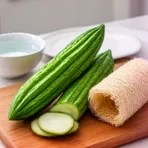
A long green vegetable with ridges that people eat when young and use as a natural sponge after it dries

A long climbing plant eaten as a vegetable or dried to make a sponge

A group of vines from warm places that make a stringy fruit used as a natural scrub sponge

A plant fruit used as a natural bath sponge, like a loofah
Surface Forms
Morphology
luffa + acutangula
This is a Latin binomial (a scientific name): while 'luffa' denotes a vine, 'acutangula' is a Latin species epithet (not a productive English word) and the full encyclopedic meaning (edible fruit, fibrous gourds used as sponges) is specific factual knowledge rather than a predictable composition of the parts. Because the phrase functions as a proper name for a particular species and relies on botanical/encyclopedic knowledge, a B1 learner who only knows the constituent words would not reliably infer the MWE's full meaning.
Etymology
Luffa acutangula gets its name from Latin words that describe the plant. The first part, Luffa, is the common name for sponge gourds and the second part, acutangula, means 'sharp-angled' and refers to the fruit's clear ridges, so the name points to a climbing plant grown for edible young fruits and for its fibrous, sponge-like mature gourds.