
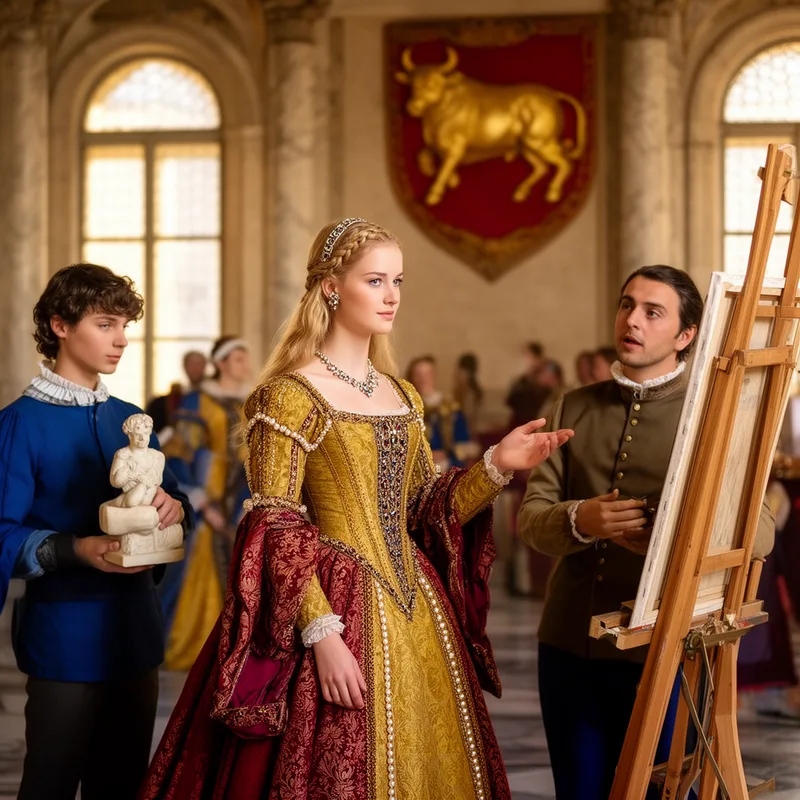
Lucrezia Borgia
 1
9.9

- proper noun
- /luˈkrɛtsiə ˈbɔrdʒə/
- Lucrezia Borgia is remembered for her connections to several powerful families during the Italian Renaissance.
Examples
-
Paintings and letters provide insight into the courtly life led by Lucrezia Borgia in Ferrara.
-
Many historians have reevaluated the life of Lucrezia Borgia, separating myth from fact.
-
Many historians consider Lucrezia Borgia a significant figure of the Renaissance.
-
Did Lucrezia Borgia really have a hand in her family's political schemes?
-
Lucrezia Borgia played a crucial role in the political alliances of Renaissance Italy.
-
As a patron of the arts, Lucrezia Borgia supported many artists during the Renaissance.
-
Lucrezia Borgia was often depicted in paintings that celebrated her influence in Italian society.
Surface Forms
Morphology
Lucrezia + Borgia
Both constituents are proper names with no readily available lexical meaning, so knowing 'Lucrezia' and 'Borgia' only signals a person’s name and not the biographical information. A B1 learner who knows the names cannot infer details like Italian noble status, historical dates, or patronage of the arts from the components, so the expression’s meaning is not derivable from its parts.
Etymology
The name Lucrezia Borgia belongs to an Italian noblewoman from the late 1400s and early 1500s who lived at the courts of powerful rulers. One popular story says she was linked to secret plots and poison, so her name often makes people think of 'plots' and 'danger'.