
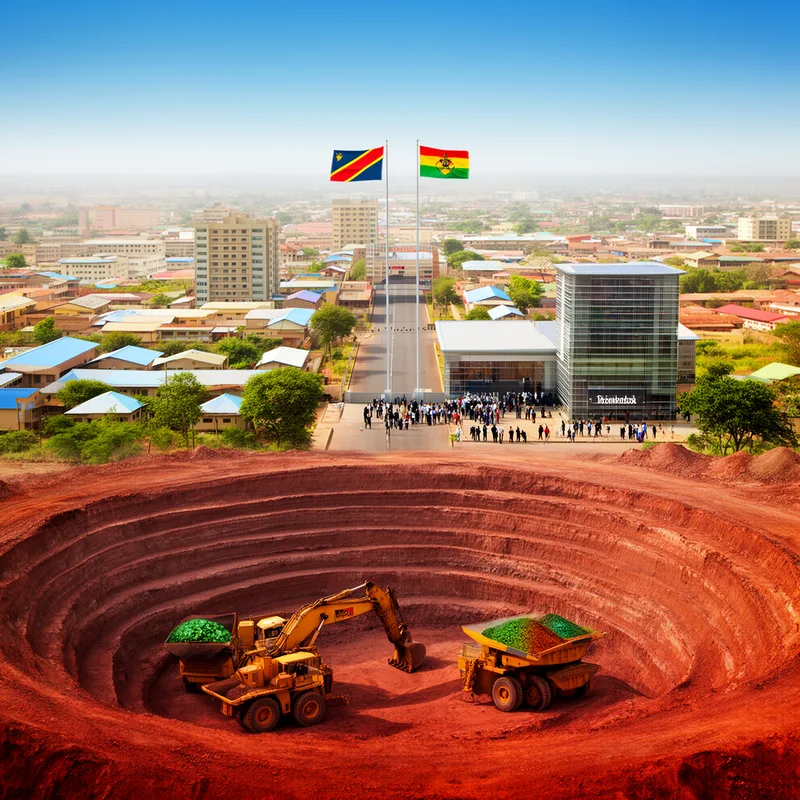
Lubumbashi


 1
8.3
- proper noun
- /luːbʊmˈbɑːʃi/
- Jubilant residents of Lubumbashi, Zaire's second-largest city.
Examples
-
Although (at least before the current crisis) Kinshasa, Lubumbashi, and other centers are developing true urban classes of four generations or more, the constant movement between city and country of very large segments of the population calls into question any facile divisions between urban and rural populations.
Academic text (1995) -
Within days of the airlift, Lubumbashi was in rebel hands.
-
In cities like Lubumbashi, they call for public debates, which they often win in the court of public opinion.
Academic text (2015) -
After some attempts in Kinshasa and Lubumbashi, in this vast land, we focused on Kamina.
Academic text (2015) -
Tshombe was also a businessman, a capitalist in Elisabethville (now Lubumbashi) who opted to work in close cooperation with Western capitalists.
Academic text (1992) -
In central Africa, this genre of painting, popular since the 1960s, has appealed to a literate and growing middle class living in Congo's urban centers, particularly Kinshasa and Lubumbashi.
Academic text (2007) -
Some of the Japanese aid has been designated to facilitate the exploitation of mineral deposits—e.g., the Japanese-financed railroad from Lubumbashi to Matadi.
Academic text (1991) -
Although Kappata seems to be unique in Zambia, across the border in Lubumbashi, on the Zairean side of the Copperbelt, and in Kinshasa, Zaire's capital, there are a number of artists of similar social background who have chosen to concentrate on traditional, colonial, and contemporary social themes.
Academic text (1997) -
In Lubumbashi, they call for public debates, which they often win in the court of public opinion.
Synonyms
Former name of Lubumbashi, a copper mining city in southeastern DR Congo near the Zambian border
Surface Forms
Etymology
Lubumbashi takes its name from a local Bantu word for a nearby 'river' or place, linking the city to the land and its people. The city was called Élisabethville under Belgian rule but returned to the local name in 1966, so the modern name reminds us of its local roots.