
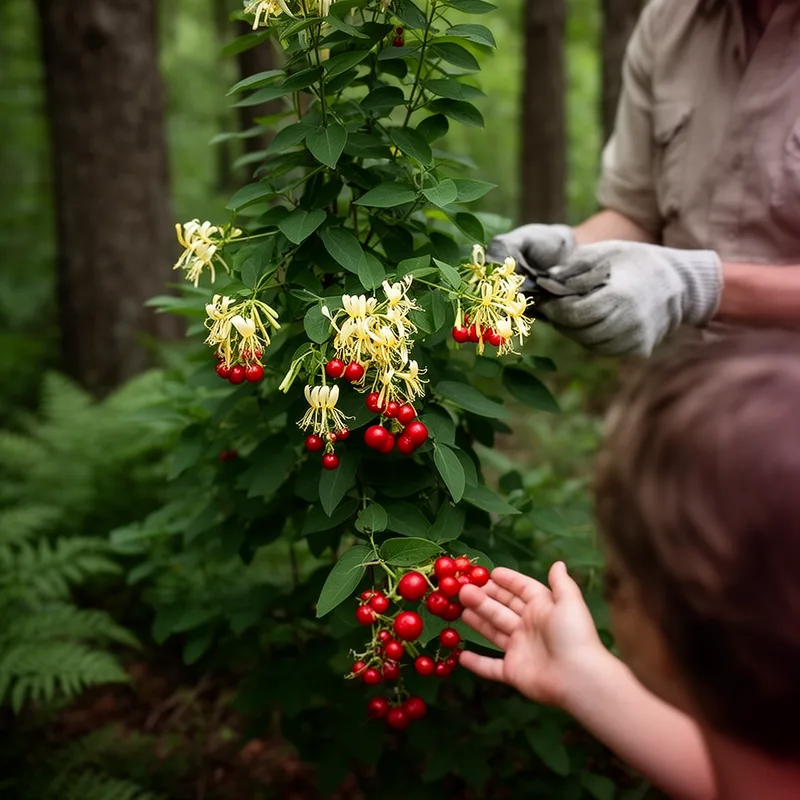
Lonicera xylosteum
- noun
- Specialized
- Gardeners often plant Lonicera xylosteum for its decorative flowers and dense foliage.
Examples
-
The berries of the Lonicera xylosteum are bright red but considered mildly toxic to humans.
-
In spring, the Lonicera xylosteum blooms with yellowish-white flowers that attract pollinators.
-
Lonicera xylosteum prefers shady woodlands and is native to parts of Central and Eastern Europe.
-
The Lonicera xylosteum is often found in gardens across Europe.
-
Many people admire the beauty of Lonicera xylosteum flowers.
-
The Lonicera xylosteum is a popular choice among landscapers due to its striking scarlet berries.
-
While hiking, we spotted a Lonicera xylosteum growing abundantly in the shaded areas of the forest.
Synonyms
A small shrub with pairs of yellowish-white flowers and bright red berries often grown in gardens
Surface Forms
Morphology
Lonicera + xylosteum
The element 'Lonicera' signals the honeysuckle genus, so a learner who knows that will infer this is a type of honeysuckle shrub; however the species epithet 'xylosteum' is not an English lexical item (and is not transparent to a B1 learner), and the specific common name and traits (e.g. 'fly honeysuckle', flower and berry colors) cannot be derived from it. Because the genus gives a clear partial cue but the full, specific meaning remains unpredictable without botanical knowledge, the expression is only partially transparent.
Etymology
Lonicera xylosteum mixes a person's name and a simple picture: Lonicera honors a long-ago herbalist, Adam Lonicer, and one popular story says xylosteum comes from old Greek words meaning 'wood', because this plant is a small woody shrub, so the name helps you remember it is a woody honeysuckle with pale flowers and bright red berries.

