
Lonicera tatarica
- noun
- Specialized
 :
Lonicera tatarica
:
Lonicera tatarica
- Many gardeners choose Lonicera tatarica for its fragrant flowers.
Examples
-
Some regions consider Lonicera tatarica an invasive species due to its rapid growth.
-
The berries of Lonicera tatarica are not edible and can be toxic if consumed.
-
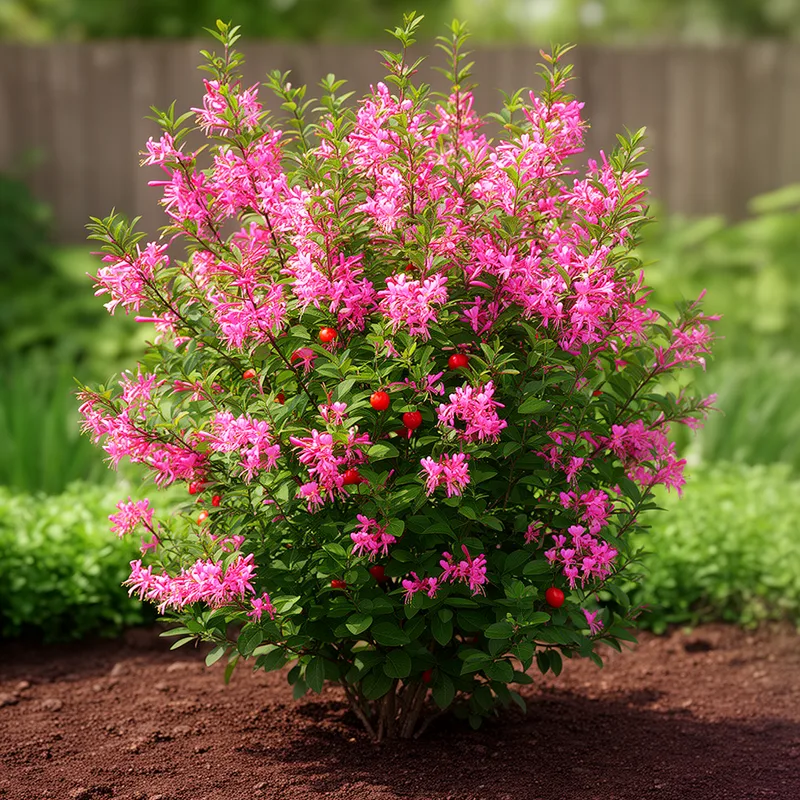
Lonicera tatarica is often planted in gardens for its attractive pink flowers.
-
The Lonicera tatarica blooms beautifully in spring.
-
Lonicera tatarica is often planted in gardens for its attractive pink flowers.
-
Many gardeners choose Lonicera tatarica for its fragrant blooms in the spring.
-
The Lonicera tatarica shrub adds vibrant color to landscaping with its beautiful flowers.
Synonyms

A garden shrub with groups of pink flowers that people plant to attract birds
Surface Forms
Morphology
Lonicera + tatarica
This is a standard scientific binomial composed of the genus name 'Lonicera' (a honeysuckle) plus a specific epithet 'tatarica'; knowing 'Lonicera' and the naming pattern makes it clear that the phrase denotes a particular species of honeysuckle. Botanical Latin names are compositional and cross-linguistically recognizable as taxonomic labels, so a learner who knows the constituents would reasonably infer 'a species/variety of honeysuckle shrub.'
Etymology
Lonicera tatarica is a plant name that may come from a person's name and a place. The first part, Lonicera, comes from Adam Lonicer, an old plant writer, and the second part, tatarica, means 'from the land of the Tatars', so the name tells you it is a honeysuckle from central Asia.

