
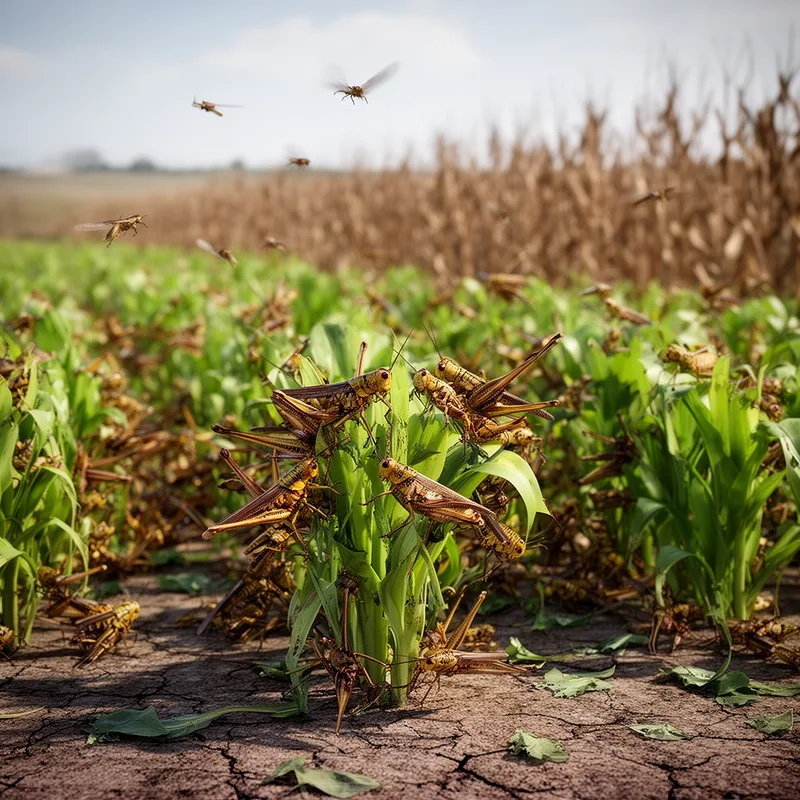
Locustidae


 1
9.9
- noun
- /loʊˈkʌstɪdeɪ/
- Specialized
- Scientists classified the insect within the Locustidae family because of its short antennae.
Examples
-
Members of the Locustidae are notable for their ability to form large swarms.
-
Many of the most destructive agricultural pests belong to the Locustidae.
-
The Locustidae family includes many species that can devastate crops.
-
Farmers are concerned about Locustidae invading their fields this summer.
-
The farmer was worried that the Locustidae would devastate his crops this season.
-
In swarms, Locustidae can cause severe damage to agricultural fields.
-
Scientists study Locustidae to understand their behavior and impact on ecosystems.
Synonyms
A family of grasshoppers, including locusts that often damage crops
Surface Forms
Morphology
Etymology
Locustidae comes from locust, the insect famous for swarms that eat crops, and the ending -idae, which means 'family' of animals. So Locustidae is the name for the family of true locusts or short-horned grasshoppers.