
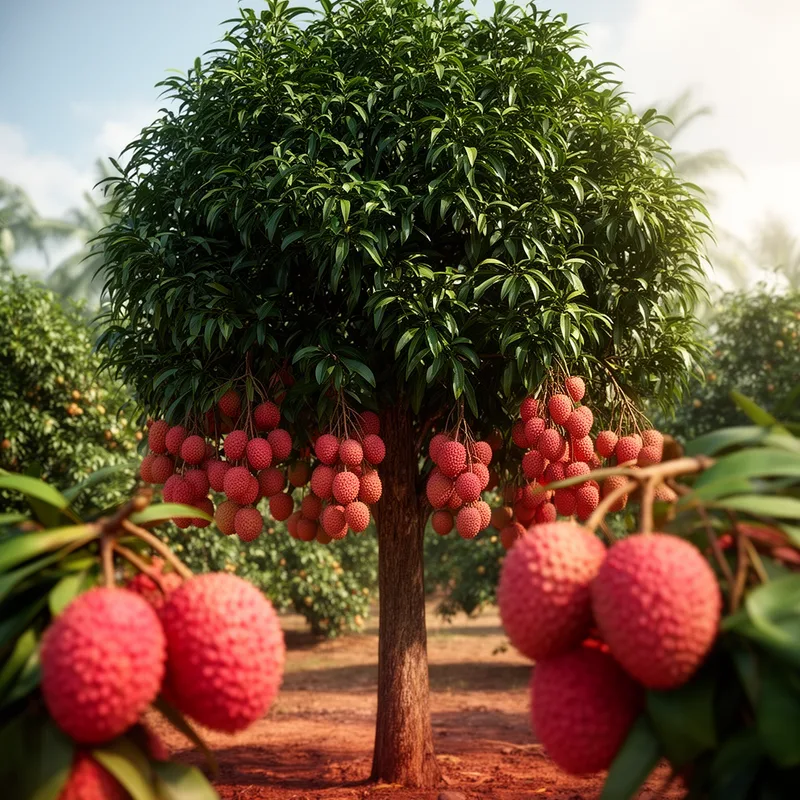
Litchi chinensis
- noun
- /ˈlɪtʃi tʃɪˈnɛnsɪs/
- Specialized
- The fruit of the Litchi chinensis is sweet and juicy, making it a popular treat in many countries.
Examples
-
In Southeast Asia, Litchi chinensis is often used in desserts and drinks for its unique flavor.
-
All are descendants of China's Litchi chinensis, the source of every domesticated lychee on the planet.
Academic text (2004) -
During the summer, we enjoy picking Litchi chinensis from the local farms.
Synonyms

A tree that keeps its leaves and produces edible fruit in warm climates

A tropical evergreen tree that makes sweet red fruits

A tropical tree that grows lychee fruit

A tropical tree that grows sweet fruit with rough red skin
Surface Forms
Morphology
litchee + chinensis
This is a Latin binomial combining the common noun 'litchee' (the fruit) with the species epithet 'chinensis' (literally ‘of China’). If a learner knows both constituents—including that 'chinensis' denotes origin—the meaning 'the lychee species from China' is directly derivable, but because 'chinensis' is a technical/Latin form not familiar to most B1 learners the compositionality is only partial.
Etymology
The name Litchi chinensis comes from the Chinese word for the fruit and from the part chinensis, which means 'from China'. One popular story says the fruit's name sounded like 'lee-chee' to early traders, so the name points to the Chinese tree and its sweet, pearl-like fruit.

