

Liszt
 6
7.5

- proper noun
- /lɪst/
- In the world of classical music, Liszt is celebrated for his innovative compositions and virtuosic piano technique.
- Liszt and Brahms
- Berlioz and Liszt
- Liszt and Wagner
Loading YouTube…
Watch on YouTubeAnd I thought instead of Newton on the beach, what if Franz Liszt were there?
- And I thought instead of Newton on the beach, what if Franz Liszt were there?
Examples
-
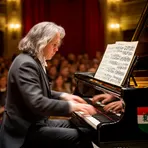
There has always been a visual aspect to music, and we need only think of Franz Liszt in one of his roles, that of nineteenth-century piano virtuoso, playing with the piano positioned so that the audience could admire his profile.
Academic text (1997) -
With such consideration, we might recognize the musical innovations that composers such as Liszt, Beethoven, and Brahms were able to achieve using the piano.
Academic text (1998) -
She's on the committee for the Liszt Competition, and she asked about you.
-
A pianist may practice hundreds of hours trying to master a Liszt concerto.
Academic text (2013) -
Once more, Liszt's études filled her with their great beauty.
Fiction book (1999) -
Tonight she'd give her listeners something very European: the Liszt Transcendental Études.
Fiction book (1999) -
Play a recording of Franz Liszt's "Totentanz: Paraphrase of the Dies Irae."
Blog text (27) -
The audience was captivated by Liszt's performance of the Hungarian Rhapsody at the gala concert.
-
Many music students aspire to learn pieces composed by Liszt due to their technical challenges.
Synonyms
 2
7.1
A Hungarian composer and very skilled pianist known for new and difficult piano music
Surface Forms
Etymology
The word Liszt is the surname of the famous Hungarian composer. In Hungarian the same word liszt means 'flour', so a simple way to remember him is to imagine flour dusting a piano, which links the name to his famous piano music.