

Linotype machine
 1
9.9
1
9.9

- noun
- /ˈlaɪnoʊtaɪp məˈʃin/
- Archaic
- Each day, the sound of clanking from the Linotype machine filled the air as typesetters prepared the next edition.
Loading YouTube…
Watch on YouTubeWell, it goes back to the old, old, old days when type was set by Linotype machines, Morgenthaler Linotype machines, the hot type.
- Well, it goes back to the old, old, old days when type was set by Linotype machines, Morgenthaler Linotype machines, the hot type.
Examples
-
As the newspaper transitioned to digital, it became rare to see a Linotype machine in the printing room.
-
Well, it goes back to the old, old, old days when type was set by Linotype machines, Morgenthaler Linotype machines, the hot type.
-
Of course, Darwin's law also applies to the companies that manufactured Linotype machines and the rest of this obsolete equipment.
Academic text (1994) -
In the age of powered rotary presses, linotype machines, and machine-made paper, he insisted on using hand presses, manual typesetting, and handmade linen paper.
Academic text (2017) -
The typesetter skillfully operated the Linotype machine to produce an entire page of text in one cast.
Synonyms

 1
9.9
1
9.9
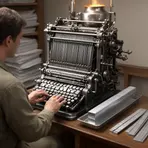
A machine that sets a whole line of metal letters using a keyboard
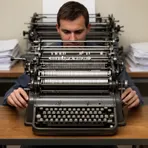
A machine that puts letters together to make text for printing
Surface Forms
Morphology
The phrase names a specific kind of device and is fully compositional: 'Linotype' (a device that sets type) combined with the noun 'machine' simply indicates that it is a machine for typesetting. There is no idiomatic or metaphorical shift, so a B1 learner who knows the constituent meanings can infer the MWE's meaning.
Etymology
Linotype machine is named because it made a whole line of type at once: a worker typed a line on a keyboard and the machine cast that line into a single piece of metal. So the name shows what it did — 'a machine for making a whole line of printed letters as one metal piece'.