
Linaria vulgaris
- noun
- Specialized
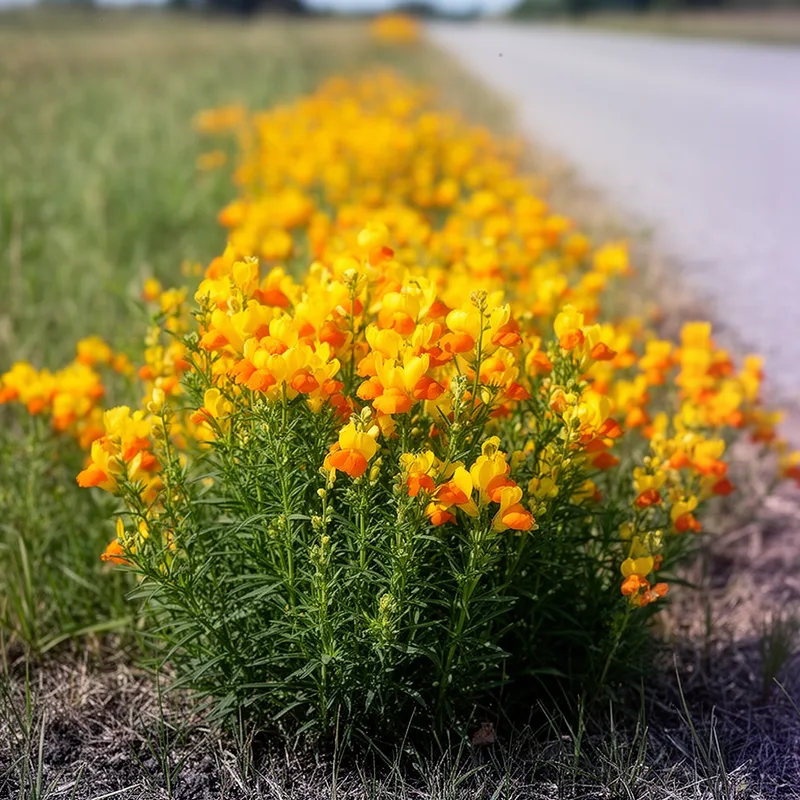
- The roadside was dotted with clusters of Linaria vulgaris blooming bright yellow and orange.
Examples
-
In North America, Linaria vulgaris is sometimes referred to as 'butter-and-eggs' due to its colorful flowers.
-
Gardeners often mistake Linaria vulgaris for a wildflower, but it can quickly spread and become invasive.
-
Look at this beautiful Linaria vulgaris!
-
The Linaria vulgaris blooms beautifully.
-
In North America, Linaria vulgaris is often considered a weed because it can spread rapidly in gardens.
-
The vibrant colors of Linaria vulgaris add a splash of yellow and orange to fields during the summer.
-
Gardeners should be cautious with Linaria vulgaris, as its prolific growth can outcompete other plants.
Synonyms

A plant from Europe with bright yellow and orange flowers often seen as a weed

A wild plant with yellow and orange flowers that spreads quickly in fields and roadsides

A plant with bright yellow and orange flowers that grows wild and can be a weed

A small plant with yellow and orange flowers often seen as a weed
How Common


Surface Forms
Morphology
Both constituents are semantically compositional: 'Linaria' names a genus of spurred-flower plants and 'vulgaris' is a Latin epithet meaning 'widespread' or 'common', so a learner who knows both parts can infer it denotes the common/widespread Linaria plant. The binomial naming pattern is predictable and directly builds the meaning from its parts, making it transparently interpretable.
Etymology
Linaria vulgaris is often called 'butter-and-eggs' because its flowers are bright yellow and orange, like butter and egg yolk. That simple image of yellow-and-orange blooms helps you remember that Linaria vulgaris is a common wildflower and weed that spreads along roads and in gardens.