

Limacidae
- noun
- /lɪˈmeɪsɪdi/
- Specialized
- Members of the Limacidae family can be identified by their elongated bodies and lack of shells.
Examples
-
The Limacidae thrive in moist environments, often found in gardens and forests.
-
Many gardeners are concerned about Limacidae because these slugs eat young plants.
-
The Limacidae are distributed throughout Europe and parts of Asia.
-
Look at that Limacidae!
-
The Limacidae family includes various species of slugs.
-
Many gardeners are concerned about Limacidae because these slugs eat young plants.
-
Members of the Limacidae family can be identified by their elongated bodies and lack of shells.
Synonyms
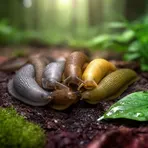
A group of slugs with soft bodies and no visible shell
Compounds
Surface Forms
Morphology
Limacidae = Limax (opaque) = limac + idae
Formed with the specialized scientific family suffix '-idae' attached to a Latin stem; this taxonomic formation is not transparent to average learners without biological knowledge.
Etymology
Limacidae comes from the Latin limax, which means 'slug', plus the family ending -idae meaning 'family' for animal groups. So Limacidae really means the 'slug family', which is why it names a group of land slugs that have no shells.

