
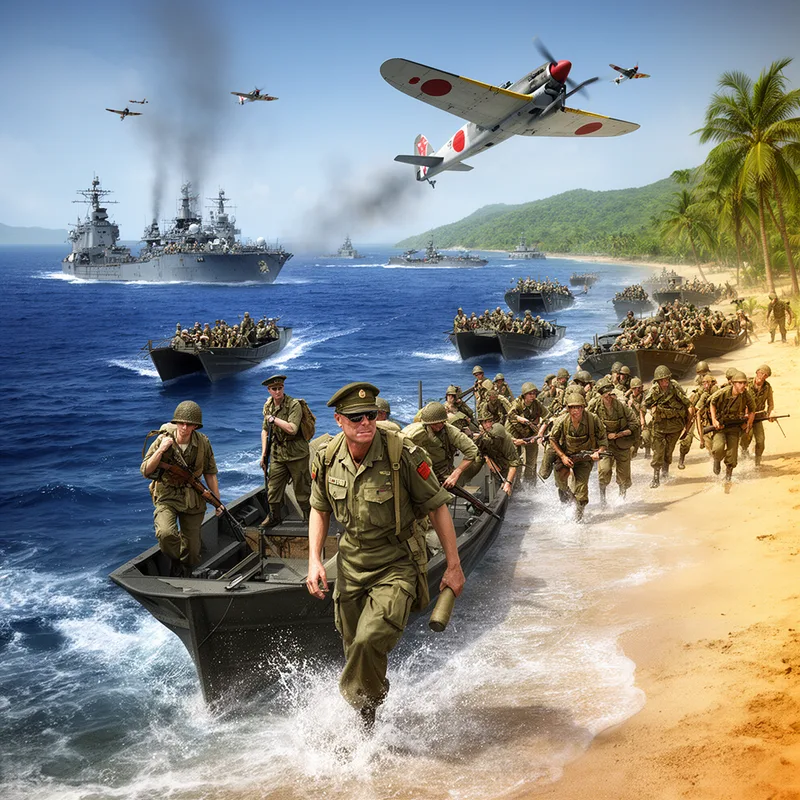
Leyte invasion
- noun
- /ˈleɪteɪ ɪnˈveɪʒən/
- The Leyte invasion in October 1944 was crucial for the liberation of the Philippines.
Examples
-
The Japanese first used kamikaze tactics against Allied ships during the Leyte invasion.
-
General MacArthur famously declared, "I have returned," during the Leyte invasion.
-
The Leyte invasion marked a turning point in the Pacific War.
-
The Leyte invasion was a pivotal moment in World War II.
-
During the Leyte invasion, many soldiers displayed incredible bravery.
-
The Leyte invasion is remembered as the first time Japan deployed kamikaze attacks in World War II.
-
After the Leyte invasion, the Allied forces regained significant control in the Pacific Theater.
Synonyms
A major World War II battle in 1944 when US forces return to the Philippines and kamikaze planes are used

A 1944 battle at Leyte that began the retaking of the Philippines and first used kamikaze attacks
Surface Forms
Morphology
The phrase is a straightforward composition of the place name 'Leyte' and the event noun 'invasion', so a learner who knows both constituents can infer it denotes a military invasion that took place at Leyte. While the specific historical details (date, significance, kamikaze use) require background knowledge, the core meaning 'an invasion of Leyte' is directly derivable from the parts.
Etymology
Leyte invasion names the Allied landing on Leyte island in October 1944, when General MacArthur came back and said 'I have returned'. The strong picture of ships and soldiers returning, and the first use of Japanese 'kamikaze' attacks there, is why the name marks the big return of US forces and a turning point in the war.

