
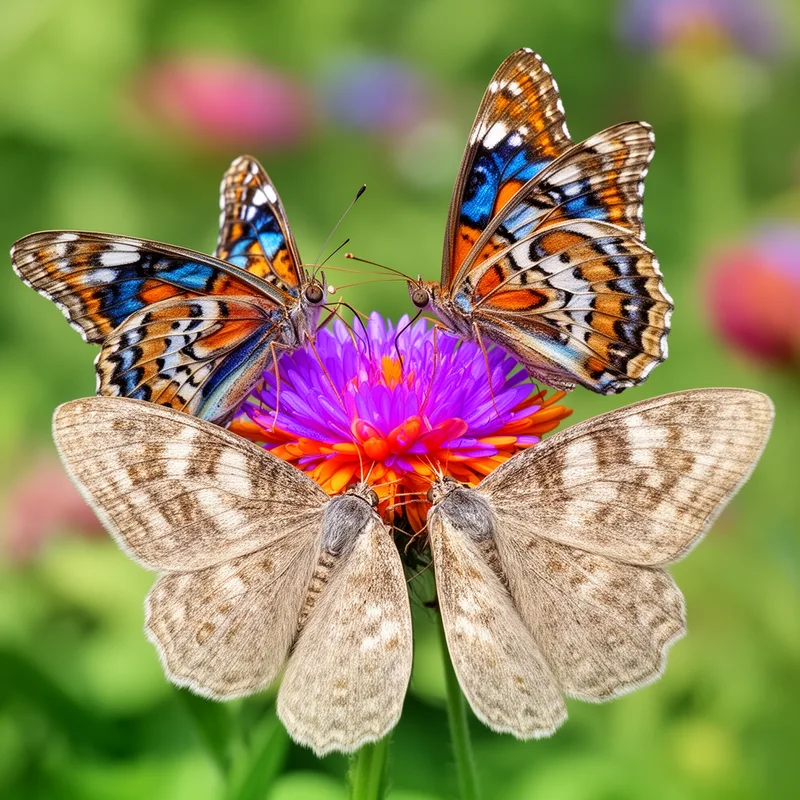
Lepidoptera
 1
9.9
1
9.9

- noun
- /ˌlɛpɪˈdɒptərə/
- Specialized
- Butterflies and moths are both classified under the order Lepidoptera due to their distinctive scaly wings.
- Lepidoptera: butterflies
Examples
-
In Exeter, we found that looking at Lepidoptera butterflies and moths, it was a rich source of structural diversity and appearance diversity.
-
The Lepidoptera exhibit a stunning variety of colors and patterns, making them a favorite among insect enthusiasts.
-
They're two of the rarest lepidoptera in the world.
-
Only 10 of the 87 nonindigenous Lepidoptera species were represented on the high-impact list.
Academic text (2010) -
Recent findings, however, have shed light on the function of a variation in sperm morphology that has been observed in Lepidoptera (butterflies).
Academic text (1999) -
The Lepidoptera (moth and butterfly) collection occupies an amazing 23,000 drawers and 3,000 alcohol jars.
Academic text (2002) -
During our hike, we saw several species of Lepidoptera fluttering among the flowers in the meadow.
Synonyms
A group of insects that includes butterflies and moths with scaly wings
Compounds
- Specialized
A group of insects that includes butterflies and moths with scaly wings
Surface Forms
Morphology
Lepidoptera = lepido + ptera
A technical taxonomic name built from Greek combining forms that are not productive or familiar to average learners, so the meaning cannot be derived from recognizable English base words.
Etymology
The word Lepidoptera comes from Greek parts lepido- meaning 'scale' and -ptera meaning 'wings'. That's why Lepidoptera is the group name for moths and butterflies whose wings are covered in tiny, often colorful, scales.