
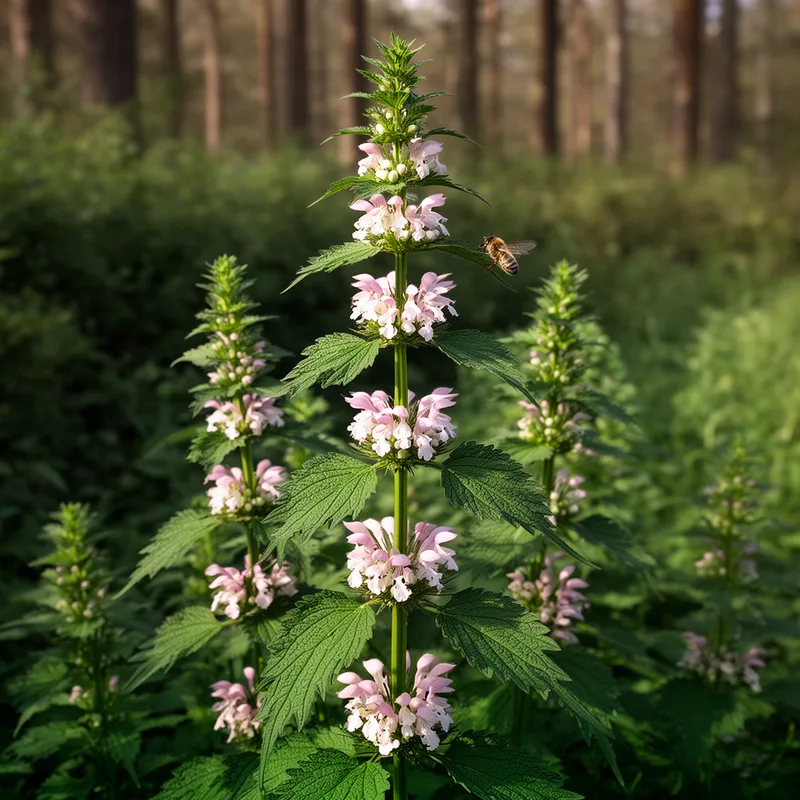
Leonurus cardiaca
- noun
- Specialized
- The white or pale pink flowers of Leonurus cardiaca appear along country hedgerows in late spring.
Examples
-
Botanists studied the ecological benefits of Leonurus cardiaca in supporting pollinator populations.
-
Leonurus cardiaca has been traditionally used in herbal medicine for heart and nerve conditions.
-
I found some Leonurus cardiaca growing near the river.
-
Have you ever seen Leonurus cardiaca in bloom?
-
Traditional herbalists often recommend Leonurus cardiaca to help with anxiety and heart health.
-
In the garden, Leonurus cardiaca attracts bees and butterflies with its pale pink flowers.
-
During my walk, I noticed Leonurus cardiaca growing wild along the paths in the woodland.
Synonyms
 1
9.9
1
9.9

A bitter herb with jagged leaves and pale pink or white flowers sometimes used in herbal medicine
Surface Forms
Morphology
Leonurus + cardiaca
This is a Latin binomial (genus + specific epithet) used as a technical plant name rather than a compositional English phrase; knowing the parts 'Leonurus' and 'cardiaca' does not yield the everyday meaning 'motherwort' to a B1 learner. Although 'cardiaca' has a classical root related to 'heart', that morphological cue is specialist and not sufficient for general learners to infer the herbaceous plant meaning.
Etymology
The name Leonurus cardiaca may come from old Greek words: Leonurus meaning 'lion's tail' for the plant's long, shaggy flower spikes and cardiaca meaning 'heart' because people used the herb for heart and nerve problems. So the name points to both the plant's look and its traditional use for 'heart' problems.