
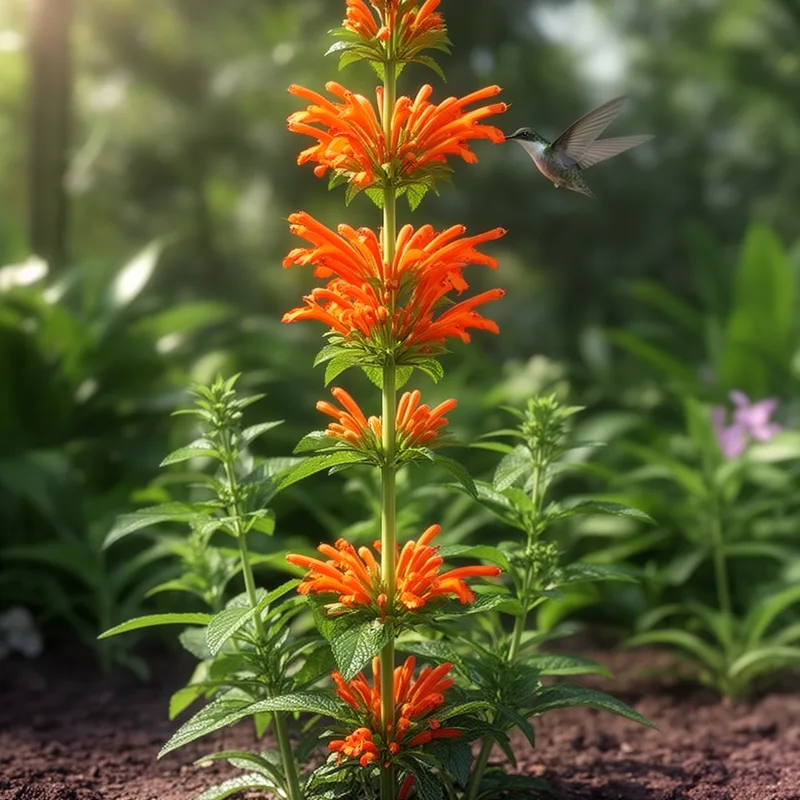
Leonotis nepetifolia
- noun
- Specialized
- The garden's centerpiece was a tall Leonotis nepetifolia, its orange flowers attracting hummingbirds.
Examples
-
Researchers studied the medicinal properties of Leonotis nepetifolia in tropical regions.
-
The Leonotis nepetifolia blooms beautifully in the summer.
-
In some areas, Leonotis nepetifolia is grown as an ornamental herb for its vibrant blooms.
-
Have you seen a Leonotis nepetifolia in the garden?
-
In some areas, Leonotis nepetifolia is grown as an ornamental herb for its vibrant blooms.
-
The garden's centerpiece was a tall Leonotis nepetifolia, its orange flowers attracting hummingbirds.
-
The Leonotis nepetifolia blooms beautifully in the summer.
Synonyms

A tropical plant with rings of bright orange, lip-shaped flowers native to Africa and Asia now growing widely elsewhere
A plant with bright orange flowers shaped like small lips that grow in rings
Surface Forms
Morphology
Leonotis + nepetifolia
This is a Latin binomial (taxonomic name) composed of genus and species epithets rather than a standard English phrase; the parts are proper names or Latin roots (and one is not even found in the dictionary), so a B1 learner who knows the constituent forms would not be able to infer the descriptive meaning 'a tropical herbaceous plant with orange flowers.' Taxonomic names do not follow everyday English compositional patterns and function as labels, making the expression unpredictable without botanical knowledge or prior exposure.
Etymology
Leonotis nepetifolia may come from old words: Leonotis meaning 'lion' and nepetifolia meaning 'catmint-like'. Its bright orange flower spikes look like a 'lion's tail', so the name gives an easy picture to remember the plant.

