
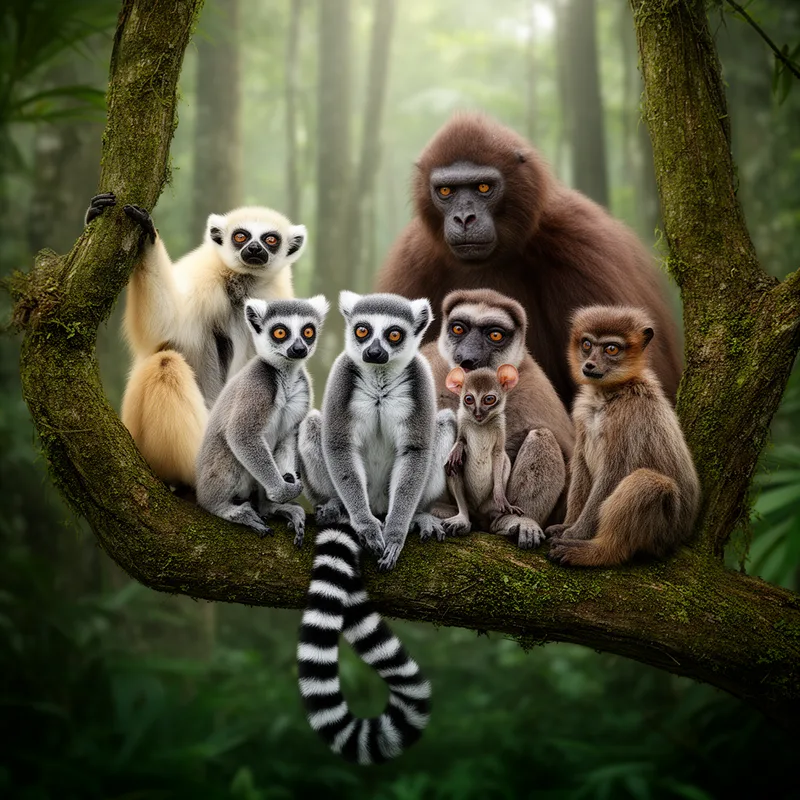
Lemuroidea
- noun
- /lɛˈmʊrɔɪdɪə/
- Archaic
- Some zoological texts list Lemuroidea as a superfamily within the primate order.
Examples
-
Taxonomists once classified many Malagasy primates under Lemuroidea.
-
The extinct species belongs to the Lemuroidea, which includes all modern lemurs.
-
The Lemuroidea superfamily includes many fascinating species.
-
Did you know that Lemuroidea are primarily found in Madagascar?
-
Many scientists continue to study the Lemuroidea to understand their evolutionary history.
-
The Lemuroidea superfamily encompasses a variety of species found only in Madagascar.
-
In textbooks, Lemuroidea is often described as a unique group of primates related to lemurs.
Synonyms

An older group used by scientists for animals like lemurs and lorises
Compounds
- Archaic
An older group used by scientists for animals like lemurs and lorises
Surface Forms
Morphology
Etymology
Lemuroidea comes from lemur, a name from old Latin for a 'ghost' or 'spirit' because these night animals looked ghost-like, and the ending -oidea means 'like' or 'group' in biology. So Lemuroidea means the 'group like lemurs' and is used for the big group that includes lemurs.

