
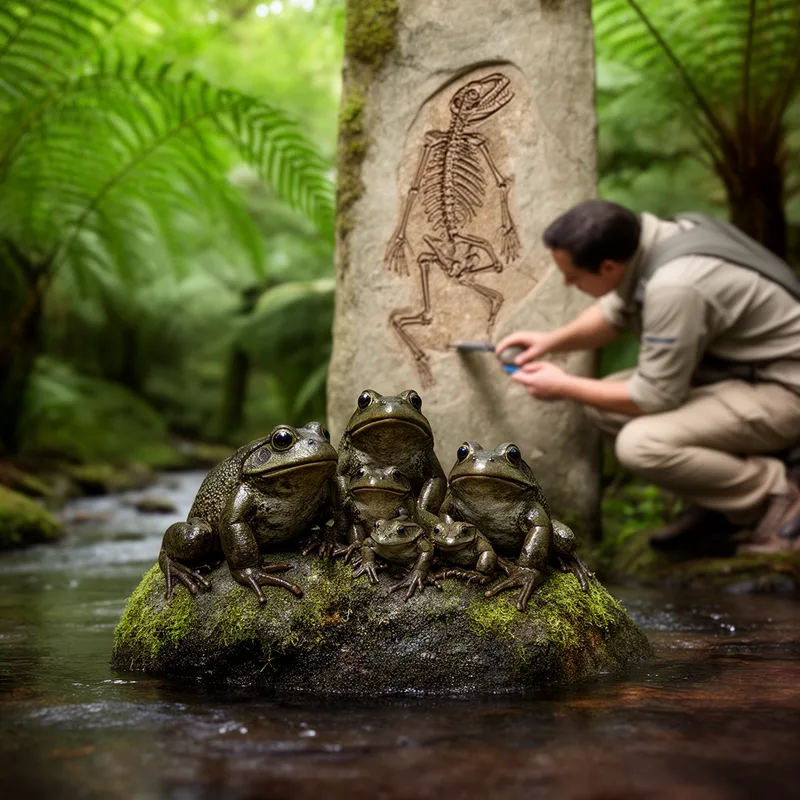
Leiopelmatidae
- noun
- /ˌleɪoʊˈpɛlməˌtiːdeɪ/
- Specialized
- Scientists study Leiopelmatidae to learn about the evolutionary history of amphibians.
Examples
-
The Leiopelmatidae are considered some of the most ancient frog families in the world.
-
Did you know that Leiopelmatidae frogs are unique to New Zealand?
-
Due to habitat loss, several species within the Leiopelmatidae are now critically endangered.
-
The Leiopelmatidae family includes some of the oldest frog species.
-
The Leiopelmatidae family is known for its unique evolutionary traits that have persisted for millions of years.
-
Researchers have discovered that Leiopelmatidae frogs share ancestry with both ancient and modern amphibians.
-
Conservation efforts focus on protecting the Leiopelmatidae to ensure the survival of these ancient species.
Synonyms
A group of frogs from New Zealand with very old body features
Surface Forms
Morphology
Leiopelmatidae = Leiopelma (opaque) = Leiopelma + idae
Built from the genus name 'Leiopelma' plus the specialized zoological family suffix '-idae', which is meaningful in taxonomy but not interpretable by average learners.
Etymology
Leiopelmatidae comes from Greek parts leios ('smooth') and pelma ('sole of the foot'), and the ending -idae means 'family'. So it literally says 'the smooth-footed family', which fits these very old New Zealand frogs that have smooth soles on their feet and are grouped as a frog family.

