

Lathyrus hirsutus
- noun
- Specialized
- Lathyrus hirsutus is often planted in southern regions as a cover crop to improve soil fertility.
Examples
-
Farmers value Lathyrus hirsutus for its hardiness and ability to provide good pasture for livestock.
-
Farmers in the southern United States cultivate Lathyrus hirsutus for its soil benefits.
-
Although native to the Mediterranean, Lathyrus hirsutus has adapted well to the climate of the United States.
-
The Lathyrus hirsutus is often found in Mediterranean gardens.
-
Lathyrus hirsutus is a popular choice among farmers in the southern United States to enhance soil quality and prevent erosion.
-
Lathyrus hirsutus thrives in warm climates, making it an excellent cover crop for agriculture in southern regions.
-
Lathyrus hirsutus is known for its ability to grow as a pasture crop, providing valuable forage for animals throughout the region.
Synonyms

A winter plant with weak stems that farmers use to cover soil and feed animals
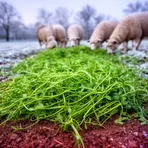
An annual plant with weak stems that grows in winter and is used to cover soil and feed animals

A winter plant with weak stems used for animal food and to improve soil

A winter plant grown as food for animals and to protect soil
Surface Forms
Morphology
Lathyrus + hirsutus
The binomial combines the genus name Lathyrus (a pea-family plant) with the Latin epithet hirsutus, which literally means 'hairy', so the name denotes a 'hairy Lathyrus' species. This is compositionally predictable for learners familiar with botanical naming or Latin-derived epithets, but it requires specialized knowledge (taxonomy/Latin) that a typical B1 learner would not have, so it is only partially transparent.
Etymology
Lathyrus hirsutus comes from old words: Lathyrus refers to a kind of 'pea' and hirsutus means 'hairy', because the plant's stems and leaves have small hairs. That's why the name fits — it is a pea-family plant with a weak, hairy stem often grown as a cover or pasture crop.

