
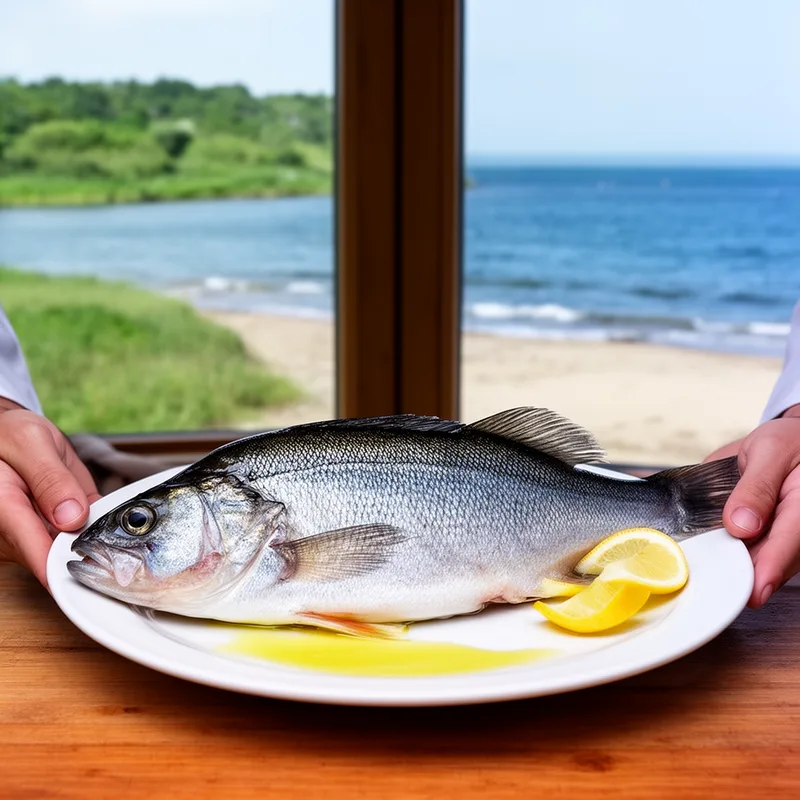
Lates calcarifer
- noun
- Specialized
- Because Lates calcarifer thrives in both saltwater and freshwater, it is farmed in diverse environments.
Examples
-
Anglers travel to northern Australia to catch trophy-sized Lates calcarifer during the spawning season.
-
The chef prepared grilled Lates calcarifer with a lemon butter sauce for the guests.
-
The Lates calcarifer is often found in coastal waters.
-
Have you ever caught a Lates calcarifer before?
-
Anglers travel to northern Australia to catch trophy-sized Lates calcarifer during the spawning season.
-
The chef prepared grilled Lates calcarifer with a lemon butter sauce for the guests.
-
Because Lates calcarifer thrives in both saltwater and freshwater, it is farmed in diverse environments.
Synonyms

 4
8.8
4
8.8

A large Australian fish people eat for its firm white flesh

A large perch-like fish that lives in the sea, coastal areas, and rivers in the Indo-Pacific
Surface Forms
Morphology
Lates + calcarifer
This is a Latin binomial (genus + specific epithet). A learner who knows 'Lates' as a genus of large fishes would infer the phrase denotes a species of fish, but the specific epithet 'calcarifer' is not interpretable and the common-name sense ('barramundi' and its culinary/sporting connotations) cannot be derived from the parts. Because the construction partly signals a fish species but otherwise functions as an arbitrary taxonomic label, it is only partially transparent to learners.
Etymology
Lates calcarifer may come from old Latin words that describe the fish: Lates is the fish group and calcarifer means 'spur-bearing', pointing to a small spine or spur near the tail. So the name highlights a physical feature of the fish we now call 'barramundi'.