
Laocoon


 1
9.9
- proper noun
- /leɪəˈkɔːən/
- Literature
- If, during the week of the symposium, a radical new interpretation of Michelangelo (presenting evidence that he was the creator of no less an icon than the Laocoon) could be proposed by a young scholar, why shouldn't the next generation have radical new ideas about long-familiar works of African art?
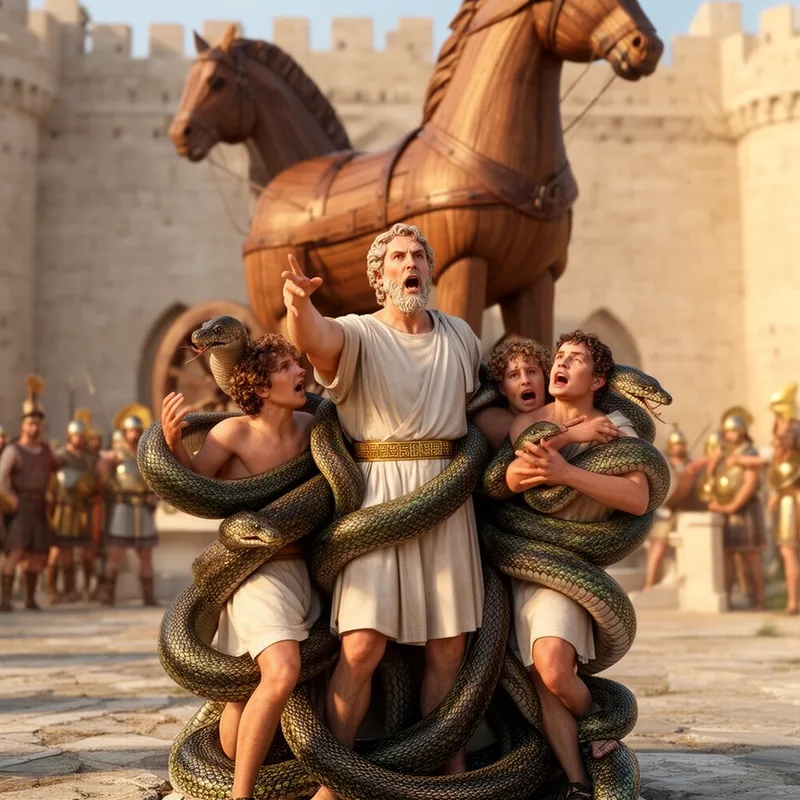
- Trojan priest Laocoon
- Laocoon, high priest
- Laocoon and his sons
Examples
-
Napoleon's booty included the Laocoon, the Apollo Belvedere, the Spinario, and the Horses of St. Mark's.
Academic text (1994) -
PHOTO (BLACK & WHITE): Marco Dente, Laocoon, engraving.
Academic text (1991) -
There was a group, like Laocoon and the serpents, one figure rising above a mass, holding above his head what seemed to be a silver buckler and a flashing bottle.
Fiction book (1998) -
That is why the body of the ancient Roman girl discovered in 1485 receives a reception so closely parallel to the Laocoon's: during these decades, the life of antiquity itself seems to be emerging from the ground.
Academic text (1991) -
In Virgil's epic, Laocoon warns the Trojans against bringing the wooden horse into Troy.
-
Only Laocoon, the Trojan priest, realized the danger of the Greek gift and tried to destroy it.
-
Laocoon and his sons met a tragic fate when serpents sent by the gods attacked them.
Surface Forms
Etymology
Laocoon comes from Greek myth and is the name of a Trojan priest who warned the people about the Greek wooden horse but was killed, with his sons, by sea serpents sent by the gods. A helpful way to remember Laocoon is to think 'tragic warning', because his story and the famous statue both show a true warning that was ignored.