
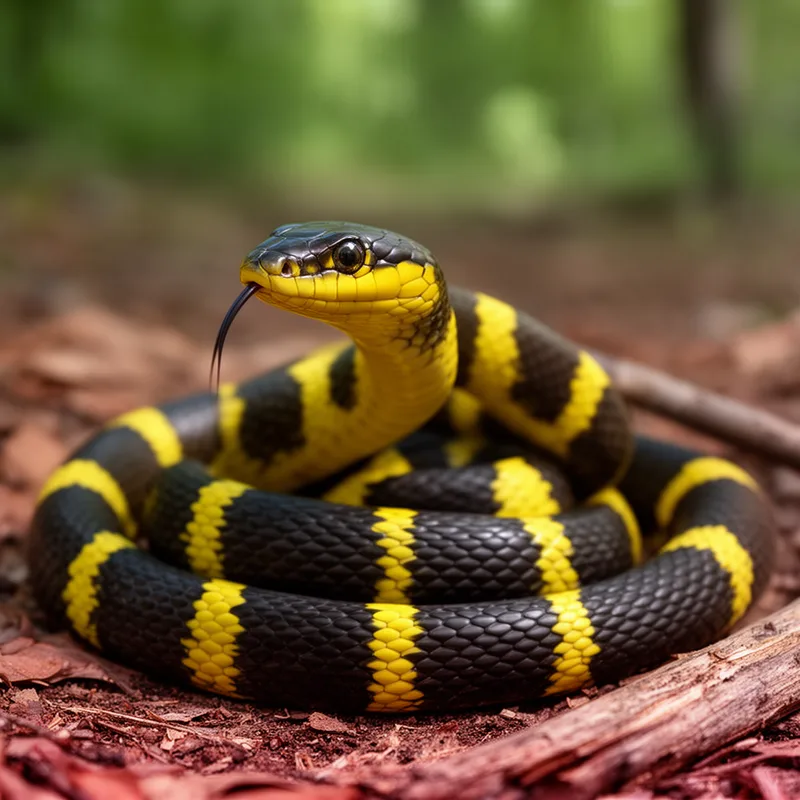
Lampropeltis getulus
- noun
- /ˌlæmroʊˈpɛltɪs ˈɡɛtələs/
- Specialized
- I spotted a Lampropeltis getulus slithering through the underbrush during my hike in Georgia.
Examples
-
Herpetologists often study Lampropeltis getulus due to its diverse habitat range across the United States.
-
Herpetologists often study Lampropeltis getulus because it is nonvenomous and has a wide variety of colors.
-
The Lampropeltis getulus is revered for its resistance to venom and striking coloration.
-
The Lampropeltis getulus is a striking snake.
-
Many people admire the beauty of the Lampropeltis getulus.
-
I spotted a Lampropeltis getulus slithering through the grass in my backyard last summer.
-
The Lampropeltis getulus is known for its striking yellow bands against its dark body.
Synonyms


 1
5.8
1
5.8
A North American snake that does not have venom and often eats other snakes and small animals
 1
6.9
1
6.9
A North American snake that is not venomous and squeezes its prey, often eating other snakes
A not poisonous American snake with a dark body and yellow bands that lives in many places
Surface Forms
Morphology
Lampropeltis + getulus
This is a scientific Latin binomial (a genus + species name) rather than a compositional English phrase; the genus label and the species epithet are proper taxonomic names rather than ordinary words whose meanings combine to give the referent. A B1 learner who ‘knows’ the constituent forms still would not be able to derive that it refers to the eastern kingsnake without specialist biological knowledge, so the expression is not transparently predictable from its parts.
Etymology
Lampropeltis getulus may come from old words: Lampropeltis meaning 'shiny' and getulus meaning 'shield', because the snake's scales look like small shiny shields. That's a strong image to remember this banded snake that is 'not poisonous'.