
Lady Day
 1
8.4
1
8.4

- noun
- UK
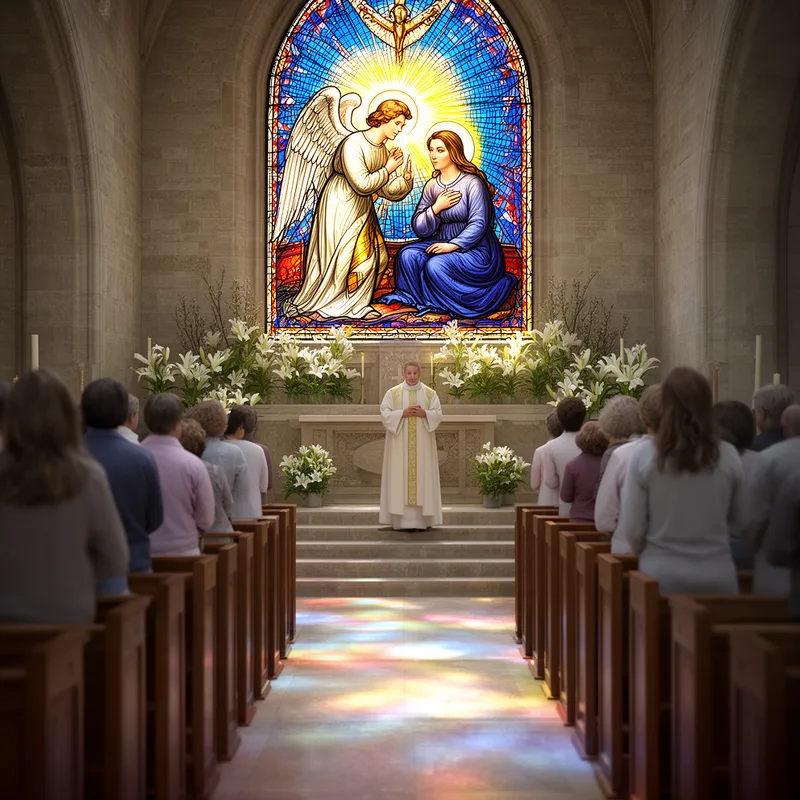
- The festival of Lady Day is celebrated on March 25 to honor the announcement made by the angel Gabriel to Mary.
Examples
-
Many churches celebrate Lady Day with special services.
-
Many schools in England used to begin their new year on Lady Day.
-
Church services are held on Lady Day to mark the Annunciation.
-
The tradition of paying rent on Lady Day has gradually faded over time.
-
Don't forget Lady Day!
-
In the Christian calendar, Lady Day marks the beginning of spring and is a significant religious observance.
-
Many people prepare special services and activities for Lady Day to commemorate the Annunciation.
Synonyms

A Christian festival that remembers when the angel Gabriel told Mary she would have a son, held on March 25

A Christian festival on March 25 that marks the angel Gabriel's message to Mary that she would become Jesus' mother

A Christian festival celebrating the angel Gabriel's announcement to Mary and a traditional rent day in England
Surface Forms
Morphology
Lady + day
This is a culturally and historically specific proper-name for the Feast of the Annunciation / a traditional quarter day; knowing 'lady' (a woman) and 'day' (a calendar day) will not let a B1 learner infer the festival date or religious/administrative sense. The meaning is tied to tradition and naming conventions rather than straightforward compositional semantics, making it unpredictable from the parts.
Etymology
Lady Day comes from Lady meaning the 'Virgin Mary' and from Day because it marks March 25, the festival called the 'Annunciation' when an angel told Mary she would have Jesus. Because this was an important church date, it became a traditional 'quarter day' for starting the year and paying rent, so Lady Day today means both the festival and the old payment day.