

Lactuca sativa
- noun
- /lækˈtuːkə ˈseɪtəvə/
- Specialized
- The crisp leaves of Lactuca sativa make it a favorite ingredient in sandwiches and wraps.
Examples
-
We planted Lactuca sativa in our garden this spring.
-
The salad was made with fresh Lactuca sativa leaves.
-
Lactuca sativa is cultivated worldwide as the main source of fresh lettuce in salads.
-
Researchers often study Lactuca sativa to understand the genetics of leafy vegetables.
-
Lactuca sativa is commonly used in Caesar salads for its crunchy texture.
-
The local grocery store sells organic Lactuca sativa that is perfect for making salads.
-
In the garden, we grow Lactuca sativa alongside tomatoes and cucumbers for fresh salads.
Synonyms

 93
1.0
93
1.0

A leafy green vegetable often eaten raw in salads
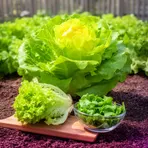
A leafy garden plant with crisp leaves used in salads

A leafy vegetable grown in gardens for fresh salads
Surface Forms
Morphology
The name is a regular Linnaean binomial composed of the genus 'Lactuca' (a plant genus) and the species epithet 'sativa' (cultivated), so a learner who knows those constituent meanings can infer it denotes the cultivated species of Lactuca (lettuce). Scientific Latin binomials are compositional and cross-linguistically used to label species, so the overall meaning is transparent rather than idiomatic.
Etymology
Lactuca sativa is a scientific name that comes from Latin words: Lactuca relates to 'milk' because the plant gives a white, milky sap when cut, and sativa means 'sown' or 'grown' in gardens. So the name points to a cultivated plant with milky sap, which is why it is used for lettuce today.