
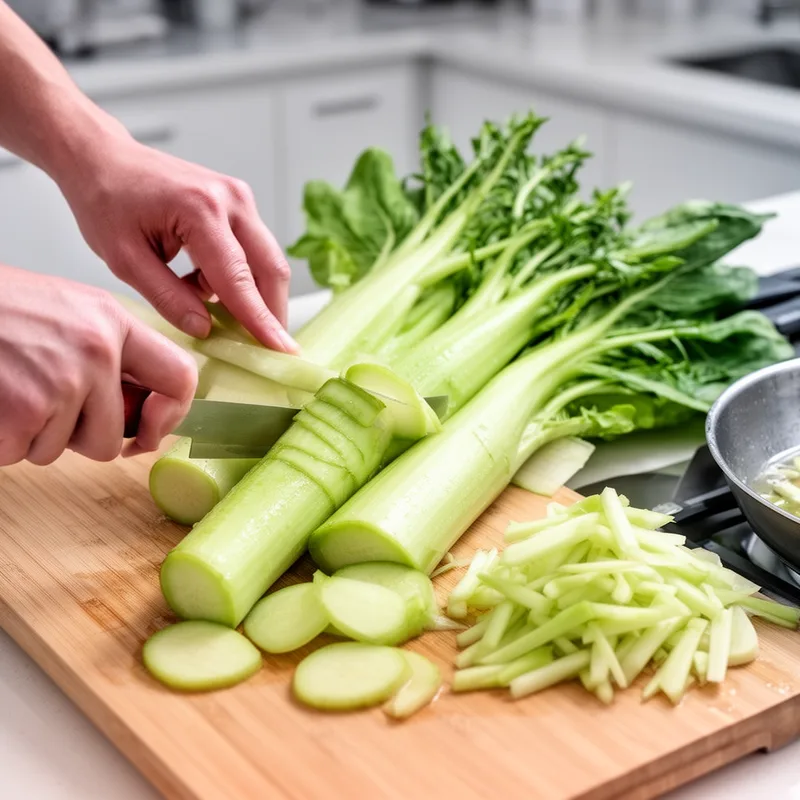
Lactuca sativa asparagina
- noun
- Specialized
 :
celtuce
:
celtuce
- In the market, Lactuca sativa asparagina is often sold under the common name “celtuce.”
Examples
-
Lactuca sativa asparagina is commonly used in Asian cuisine for its crisp, tender stems.
-
Lactuca sativa asparagina is known for its thick, crunchy stems that are delicious in stir-fries.
-
Farmers in some regions grow Lactuca sativa asparagina instead of regular lettuce to diversify their crops.
-
I love adding Lactuca sativa asparagina to my salads.
-
Have you tried Lactuca sativa asparagina in your dishes?
-
Many chefs prefer using Lactuca sativa asparagina in their recipes because of its unique texture and flavor.
-
Lactuca sativa asparagina can be found in specialty grocery stores, where it is sold as a fresh vegetable.
Synonyms

A lettuce that people eat for its thick edible stem, often sliced for salads

A lettuce that has a thick edible stem and tender leaves and is eaten raw or cooked
Surface Forms
Morphology
This is a specialized botanical Latin name rather than a compositional English phrase; knowing 'Lactuca' (a genus) and 'sativa' (cultivated) does not let a typical B1 learner infer the specific cultivar property because 'asparagina' is not a transparent English word and requires botanical/etymological knowledge. The meaning (a lettuce variety grown for thick edible stems) is technical and language-specific, so it is not predictable from the parts for average learners.
Etymology
Lactuca sativa asparagina comes from Latin words: Lactuca means 'lettuce', sativa means 'cultivated', and asparagina refers to 'asparagus' because this plant has long, crunchy stems that look a little like asparagus. That's why the name describes a lettuce grown for its thick edible stems rather than its leaves.

