
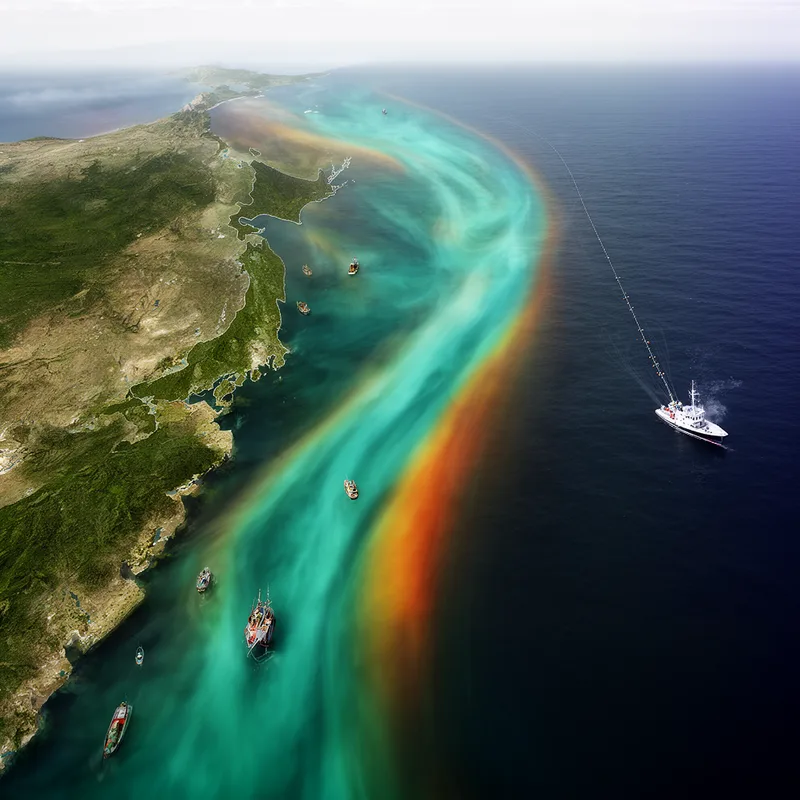
Kuroshio current
- noun
- /ˈkuːroʊʃiˌoʊ ˈkɜːrənt/
- The Kuroshio current creates a warm climate around the Japanese islands, influencing the region's biodiversity.
Examples
-
The Kuroshio current flows along the coast of Japan, bringing warm water to the northern Pacific Ocean.
-
One characteristic of the food culture of the Kuroshio Current is the use of sauce combinations for soup with soy sauce made from soybeans and salt, with salted and fermented seafood, and with salt harvested from the beach.
Academic text (2018) -
It should be noted that pig sacrifice during rituals is widely observed on other islands along the Kuroshio Current as well.
Academic text (2018) -
A new type of ecologically sustainable food culture came to be established, and in the process, the pork food culture of the islands along the Kuroshio Current zone was formed.
Academic text (2018) -
Fishermen rely on the Kuroshio current to deliver nutrient-rich waters that enhance the local fishing industry.
Synonyms
A warm ocean current off the coast of Japan that flows northeast
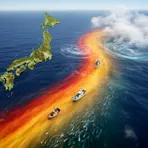
A warm ocean current that flows northeast from the coast of Japan into the northern Pacific
Surface Forms
Morphology
This is a straightforward noun+noun naming pattern: 'current' denotes a movement of water and 'Kuroshio' identifies which one (a warm current off Japan). Because the constituent 'Kuroshio' already refers to that warm ocean current, a B1 learner who knows both words can directly derive the meaning.
Etymology
Kuroshio current gets its name from the Japanese words kuro meaning 'black' and shio meaning 'tide' or 'current', because sailors saw a dark, fast stream of warm water off Japan. That's why the name describes the warm sea flow we mean today.

