
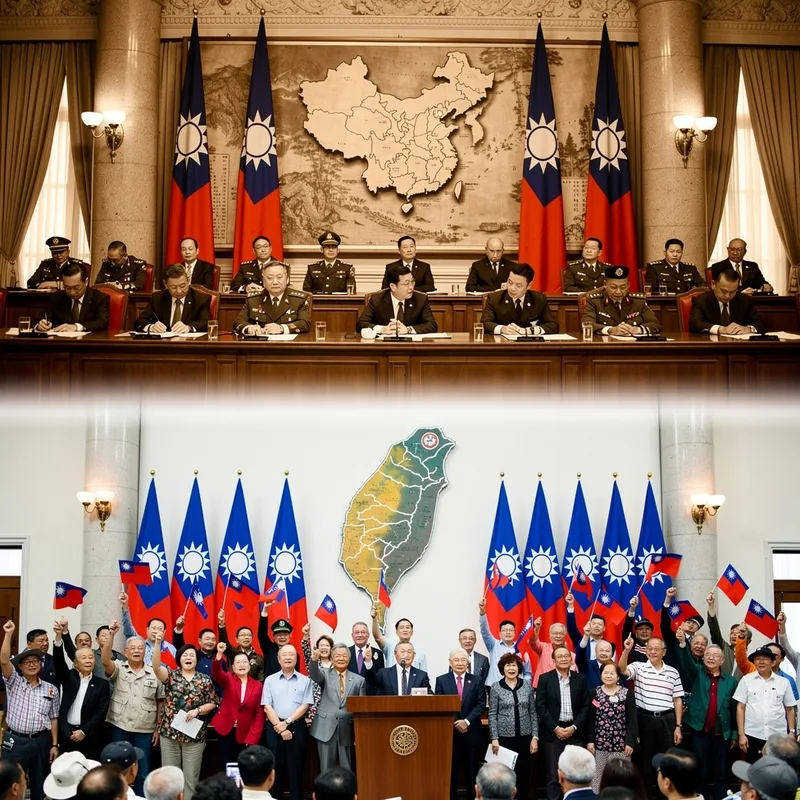
Kuomintang
 2
9.8

- proper noun
- /ˈkwō-mən-ˌtäŋ/
- The Kuomintang was the dominant political party in China before retreating to Taiwan in 1949.
- Kuomintang (KMT)
- Kuomintang (Nationalist)
- ruling Kuomintang
Loading YouTube…
Watch on YouTubeThe Soviets hope to twist the Kuomintang left flank closer to the Communists.
- The Soviets hope to twist the Kuomintang left flank closer to the Communists.
- So at their request, the Communists, including Mao Zedong, join the Kuomintang and become dual members of both parties.
Examples
-
Moreover, it was the first time that a candidate outside the ruling Kuomintang (KMT) had been elected president of the country.
Academic text (2002) -
In 1950, the Kuomintang's 93rd Division fought its way out of China into Burma's Shan State.
Blog text (9) -
Troops of the Kuomintang are now in full control of the city.
-
Both his Kuomintang and the Communist Party of China believe there is "One China" and Taiwan is a part of it.
Academic text (2015) -
The Kuomintang government officials went around congratulating each other, as if a great victory had been won.
Academic text (1991) -
We propose that talks be held between the Communist Party of China and the Kuomintang of China on a reciprocal basis.
Academic text (1997) -
In fact, 51,731 new members joined the Kuomintang during April-June 1992.
Academic text (1992) -
The sweeping land reform that was introduced in 1945 and completed in 1953 solidified the Kuomintang's hold on the island.
Academic text (1993) -
The First National Assembly had been elected in 1947, when the ruling Kuomintang (KMT) was still ensconced on the Mainland.
Academic text (1992) -
Chiang came to Taiwan as generalissimo (tsung-tsai) of the Kuomintang (KMT) party.
Academic text (2002)
Synonyms

 1
9.9
A Chinese political party founded in 1911 that ruled China until 1949 and later governed Taiwan
Surface Forms
Etymology
The word Kuomintang comes from Chinese parts guo 'country', min 'people', and dang 'party'. So it literally means the 'National People's Party' and is the name of the major political party founded by Sun Yat-sen that later governed China and continued in Taiwan.