
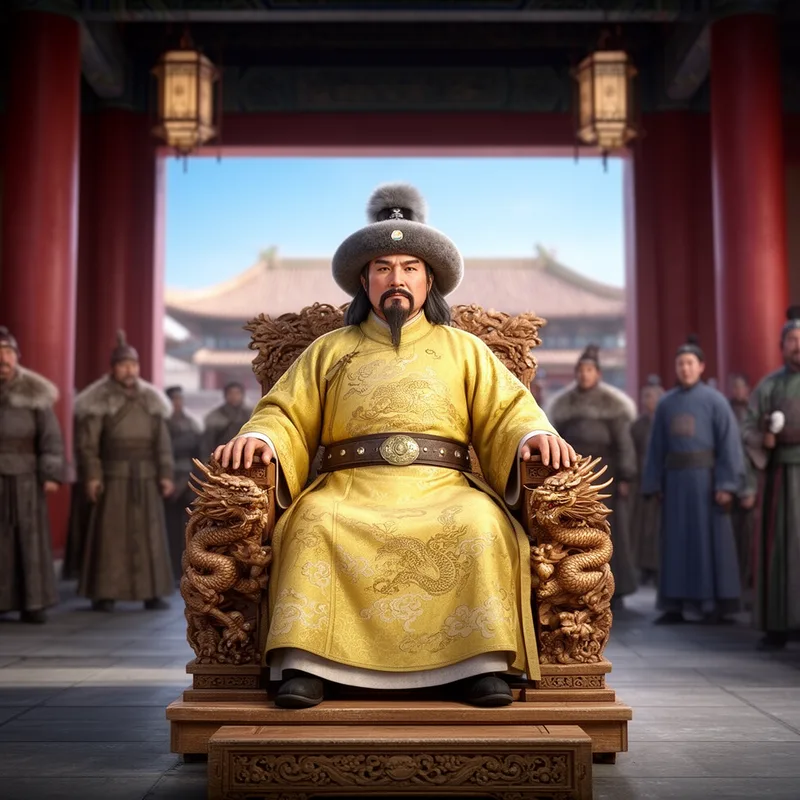
Kublai Khan
 1
7.9

- proper noun
- /ˈkuːblaɪ kɑːn/
- Did Kublai Khan really conquer all of China?
Examples
-
Marco Polo described the grandeur of Kublai Khan's court in his writings.
-
The Yuan dynasty, established by Kublai Khan, significantly influenced Chinese culture.
-
The reign of Kublai Khan marked a turning point in Chinese history.
-
The great Kublai Khan ruled over China during the Yuan dynasty.
-
After he ascended the throne, Kublai Khan established Beijing as the capital of the Yuan dynasty.
-
In 1260, Kublai Khan became the Mongolian emperor of China, marking the beginning of the Yuan dynasty.
-
The reign of Kublai Khan significantly transformed the political landscape of China during the 13th century.
Synonyms
 1
9.5
Mongol ruler who took control of China and built his capital where Beijing now stands
Surface Forms
Morphology
Kublai + khan
The phrase is a proper name plus a title: a learner who knows 'khan' (a tribal/imperial ruler) will transparently infer that Kublai is a ruler or leader. However, the specific historical sense—that he was the Mongolian emperor of China, grandson of Genghis Khan and founder of the Yuan dynasty—is encyclopedic and cannot be derived from the constituents alone, so the transparency is only partial.
Etymology
Kublai Khan was a Mongol leader who took over China and set up the 'Yuan dynasty' with his capital at Beijing. He was the grandson of Genghis Khan and used the word Khan for a ruler, so today his name is remembered as the great Mongol 'emperor' of China.