
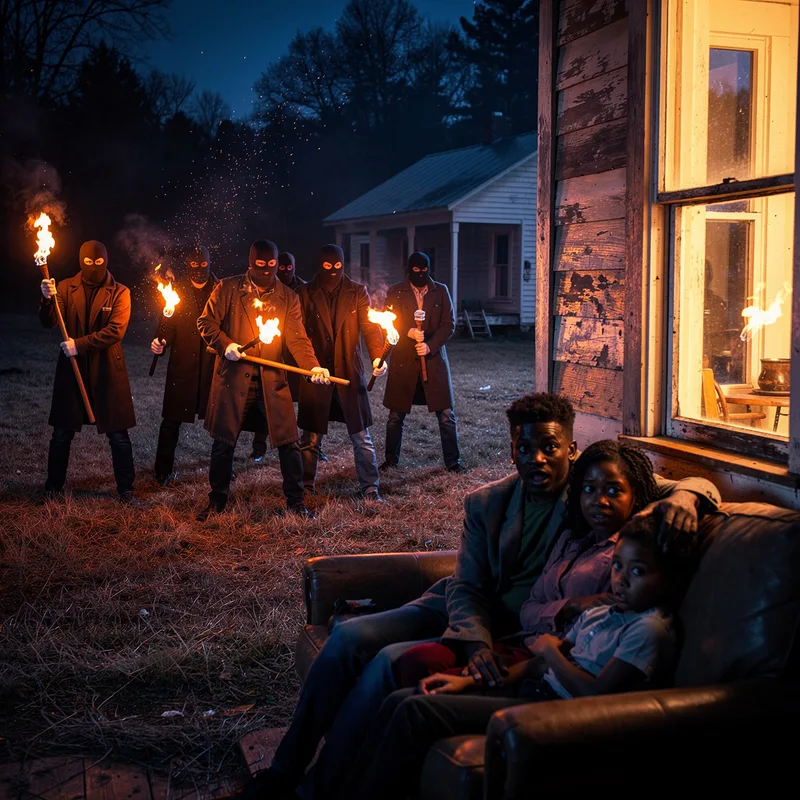
Ku Klux Klan
 36
9.8

- proper noun
- /ku klʌks klæn/
- Offensive
- Historically, the Ku Klux Klan has used intimidation to promote its extremist views.
- Ku Klux Klan
- Knights of the Ku Klux Klan
- Ku Klux Klan members
Loading YouTube…
Watch on YouTubeAnd he says I'm a member of the Ku Klux Klan.
- And he says I'm a member of the Ku Klux Klan.
- Now, the Ku Klux Klan was defending the parents who wanted to purge black history from the textbooks.
- And there was something pretty chilling about the Ku Klux Klan citing precedent that the N double ACP created.
Examples
-
Now, the Ku Klux Klan was defending the parents who wanted to purge black history from the textbooks.
-
There were all kinds of auxiliaries of the Democratic Party that really were the Ku Klux Klan or its imitators.
-
Hitler had his reasons, and even the Ku Klux Klan of the South has reasons for what they do.
Fiction book (1993) -
Did the Ku Klux Klan wear crosses as well as burn them?
Fiction book (2001) -
The only people present at the rally were Ku Klux Klan members and a camera crew, whom the Klan invited.
Academic text (2017) -
I'm from a part of the country where people justify the actions of slavery, the Ku Klux Klan and lynching.
-
It is, you know, akin to saying like the Ku Klux Klan has got a constituency in one of the parties.
-
And there was something pretty chilling about the Ku Klux Klan citing precedent that the N double ACP created.
-
Republican David Duke, a former Grand Wizard in the Ku Klux Klan, took advantage of his notorious past to garner national attention and tapped into white frustration by attacking affirmative action and welfare.
Academic text (2017) -
In the 1960s, many civil rights activists stood against the violence perpetrated by the Ku Klux Klan.
Synonyms
 37
9.9
A secret group of white people in the American South who used violence to scare and harm Black people


 1
9.9
A secret group of white people in the United States that used violence to harm Black people
Surface Forms
Morphology
Ku + Klux + Klan
This is a proper name whose parts ('Ku' and 'Klux') are non-lexical/opaque to learners and 'Klan' functions as a name rather than a compositional noun; knowing the surface constituents does not allow a B1 learner to infer the historical, political, and violent nature of the group. Proper nouns and culturally specific organization names are typically opaque across languages because their meanings require background knowledge rather than combinatorial word-meaning inference.
Etymology
Ku Klux Klan may come from the Greek word kuklos meaning 'circle' combined with klan, a spelling of 'clan', so the name gave the image of a secret 'circle' or family. That's why the name became used for a secret, violent group who believed they were better than others and who attacked Black people and other groups.