
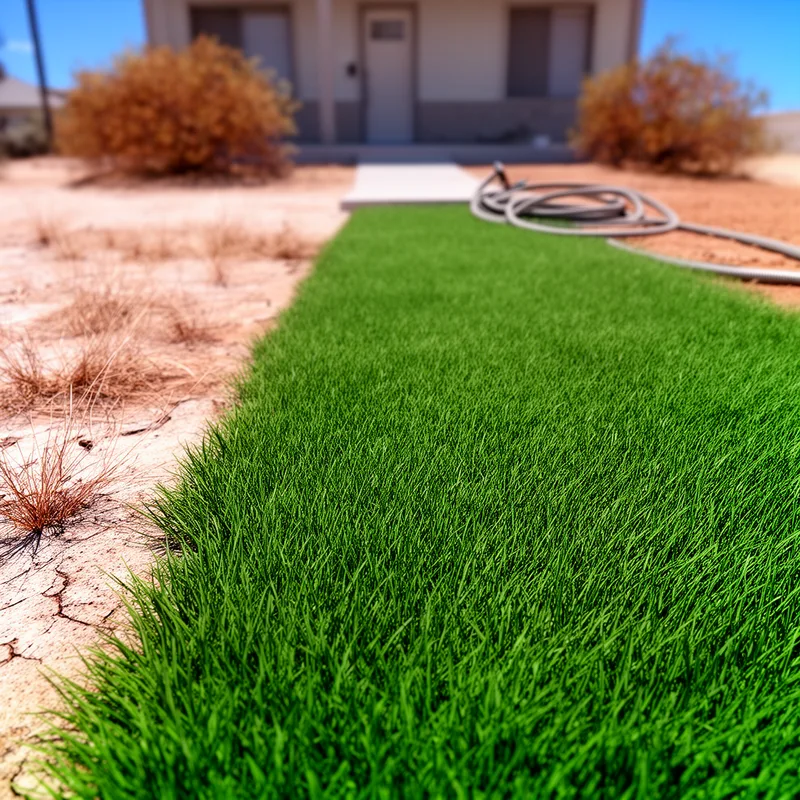
Korean velvet grass
- noun
- US
- Many homeowners in Texas have replaced their lawns with Korean velvet grass to conserve water.
Examples
-
The landscaper recommended Korean velvet grass for its ability to thrive during dry summers.
-
Korean velvet grass spreads quickly and provides a dense, green cover even in hot climates.
-
The Korean velvet grass thrives in hot climates.
-
Many homeowners prefer Korean velvet grass for their lawns.
-
Korean velvet grass is an excellent choice for homeowners looking to create a drought-resistant lawn.
-
In southern areas, Korean velvet grass has become popular due to its low water needs.
-
Gardeners often choose Korean velvet grass because it grows well in hot and dry conditions.
Synonyms

A low spreading grass with thin leaves that people plant for dry lawns and golf greens in warm places

A grass that spreads quickly and needs little water for lawns

A grass from East Asia grown for lawns and yards
Surface Forms
Morphology
All three constituents are literal and compositional: 'Korean' marks origin, 'velvet' describes a soft/velvety texture, and 'grass' names the plant. A B1 learner who knows these words can infer this is a type of soft-textured grass associated with Korea (i.e., a specific lawn grass), so the meaning is directly derivable from the parts.
Etymology
Korean velvet grass gets its name from where it comes from and how it feels: it is a 'grass' from 'Korea' with very soft, dense leaves that look like velvet. That's why the name describes this creeping lawn plant that spreads quickly and can survive dry weather.

