
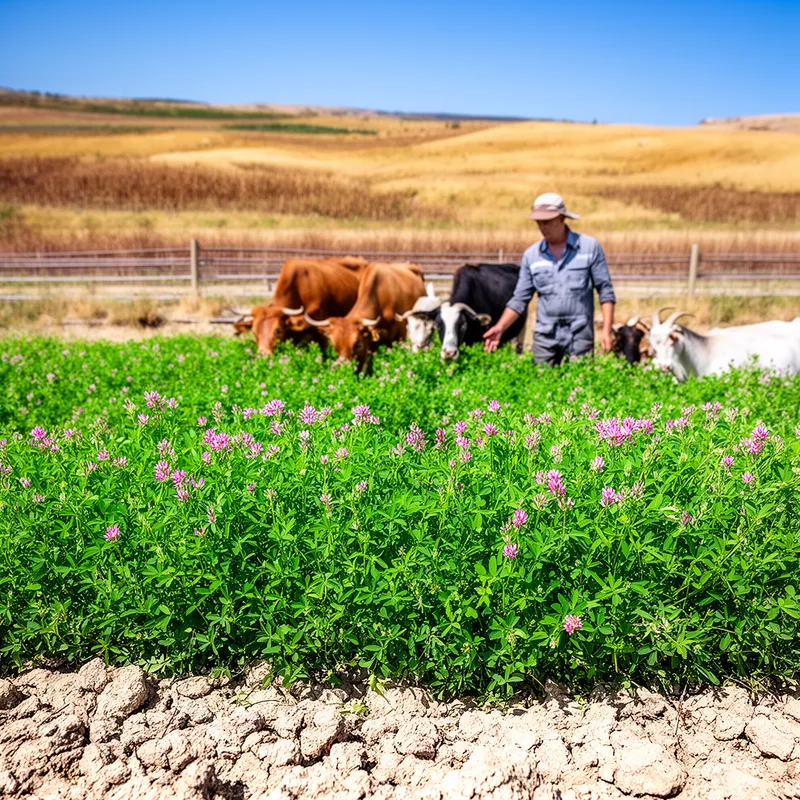
Korean lespedeza
- noun
- US
- Farmers in the southern United States often grow Korean lespedeza as a drought-resistant forage crop.
Examples
-
The Korean lespedeza thrives in hot, dry climates.
-
Because it tolerates poor soils, Korean lespedeza is a practical choice for many livestock producers.
-
The Korean lespedeza fields turned green earlier than other forages in the spring.
-
Farmers often plant Korean lespedeza for its nutritious forage.
-
Farmers in the southern United States often grow Korean lespedeza as a drought-resistant forage crop.
-
Because it tolerates poor soils, Korean lespedeza is a practical choice for many livestock producers.
-
The Korean lespedeza fields turned green earlier than other forages in the spring.
Synonyms
A plant that grows for one year and is grown for farm animal food and hay in dry places
Surface Forms
Morphology
The phrase is a straightforward adjectival modification: 'Korean' indicates origin or association and 'lespedeza' names the plant, so the combined meaning is simply a lespedeza from or native to Korea. This country-adjective + noun pattern is compositionally regular and cross-linguistically common, so a B1 learner who knows both constituents would readily understand it.
Etymology
Korean lespedeza combines Korean and lespedeza: Korean shows where the plant came from and lespedeza is the group name for these small, hardy plants. Farmers grew it in hot, dry places because it makes good 'forage' and 'hay', so the name helps us remember it is a tough Korean plant used to feed animals.

