
Khalsa


 1
9.9
- noun
- /kɑːlˈsɑː/
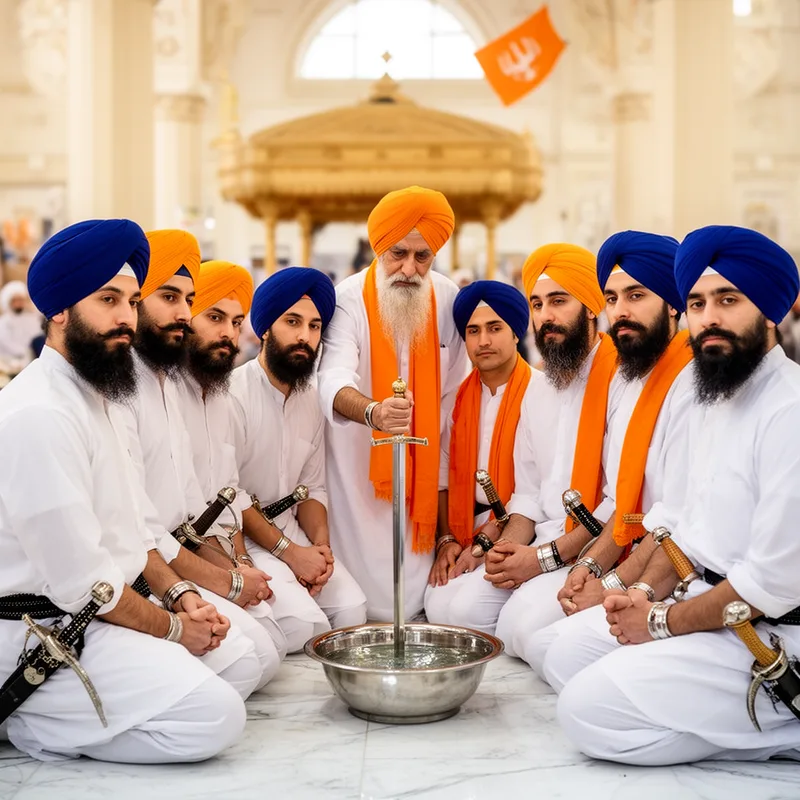
- Members of the Khalsa wear specific symbols that reflect their dedication to Sikh values and practices.
- Khalsa Sikh
Examples
-
Baptism in the Sikh Khalsa meant eligibility for entry into the army.
Academic text (1996) -
The internal rifts between the dissidents split the Khalsa Diwan into Amritsar and Lahore factions.
Academic text (2018) -
The Chief Khalsa Diwan was impeccably loyal to the British government.
Academic text (2018) -
The main objective of the Chief Khalsa Diwan was to represent the Sikhs' political demands to the government.
Academic text (2018) -
The Chief Khalsa Diwan played an important role in the consolidation of the Sikh community by rendering great services in socio-religious as well as political fields to some extent.
Academic text (2018) -
Pure Sikhs were those who belonged to the Khalsa and wore the five signs of Sikhism, including the unshorn hair (and thus the turban), the dagger, and the steel bangle.
Academic text (1996) -
Baptism in the Sikh Khalsa signifies full commitment to the Sikh faith and its practices.
-
The Khalsa represents a community of baptized Sikhs dedicated to following the teachings of Guru Gobind Singh.
Surface Forms
Etymology
The word Khalsa comes from an old Persian and Arabic word khalis, which means 'pure'. Guru Gobind Singh gave this name to the group of baptized Sikhs to show they were 'pure' and fully committed, which is why Khalsa today means the initiated, devoted Sikh community.