
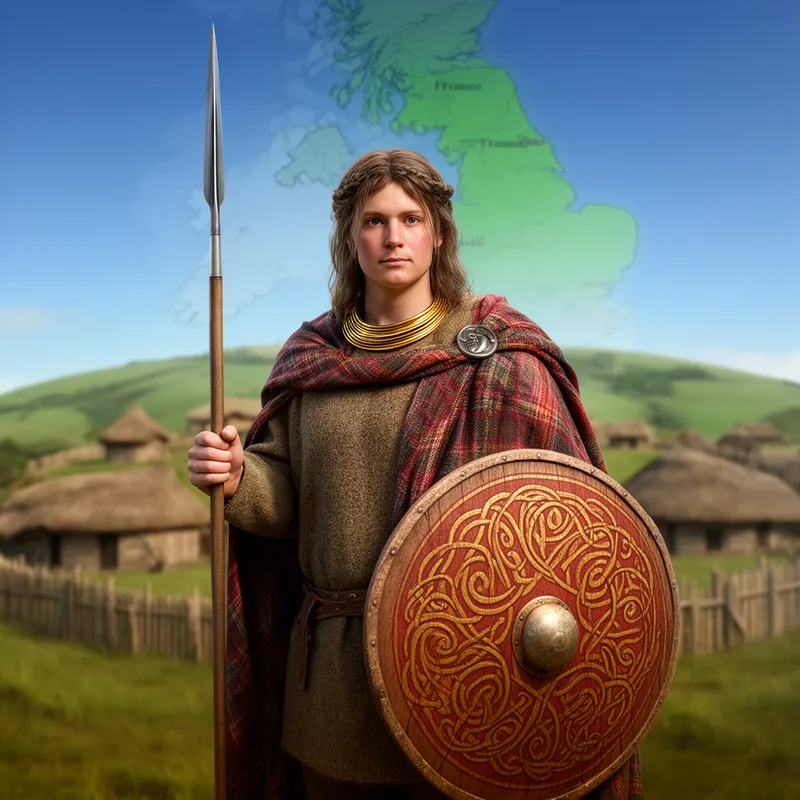
Kelt


 1
9.9
1
9.9
- noun
- /kɛlt/
- "In case you don't know, it should represent a great people (pronounced correctly as "Kelt," by the way), but it has morphed into fairy dust, wearing green pants and singing dirges.
Examples
-
In terms of battle tactics, the Kelts kept things fairly simple.
-
Celts (Kelts) are fixed in Europe not earlier than the 5th century BC.
Blog text (11) -
The very first indication of an IE language of the current R1b1a2 is in Kelts, about 500 years BC.
Blog text (11) -
However, nobody knows which haplogroup was in those Kelts 2500 ybp.
Blog text (11) -
The ancient Kelts built impressive hill forts across Britain.
-
Historians study the artifacts left by the Kelts to understand their culture.
-
In ancient times, the Kelts inhabited regions of Gaul and Spain.
Synonyms
 13
7.7
13
7.7
A person from ancient groups who lived in parts of Europe before and during Roman times
 4
9.2
4
9.2
A person from ancient Celtic tribes who lived in northern France and nearby lands
 1
8.8
1
8.8
A person from the ancient Celtic people who lived in Britain before the Anglo-Saxon invasions
Surface Forms
Etymology
Kelt comes from the old Greek name Keltoi, a word ancient writers used for a 'group of tribes' in parts of Europe. That name later became the Latin Celtae and the English words Celt and Celtic. So, a Kelt is one of those ancient European people, which is why the word names the early tribes of Britain, Spain, and Gaul.