
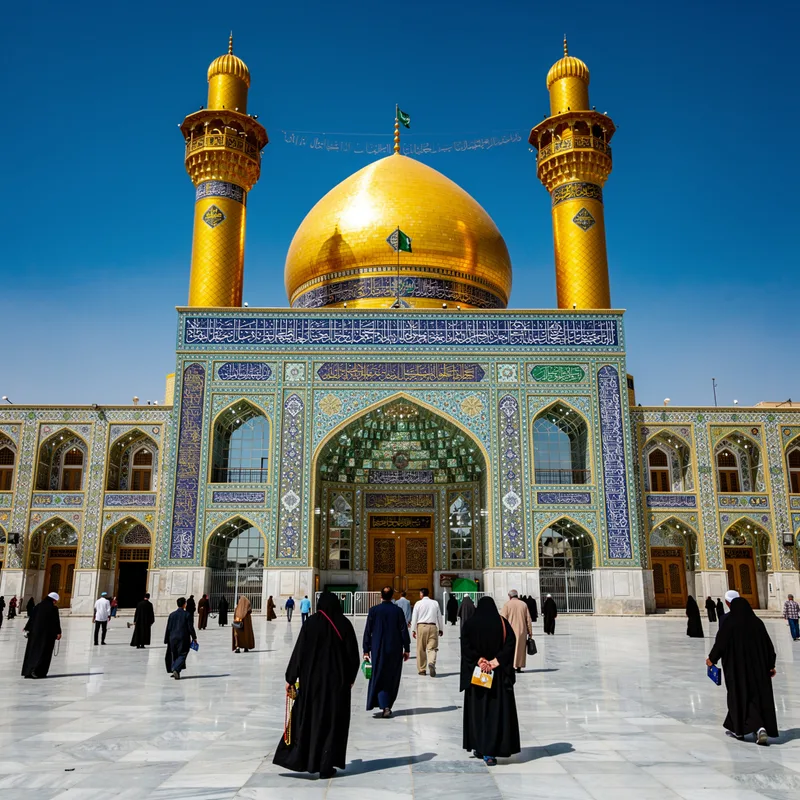
Karbala
 11
8.7

- proper noun
- We were standing in the mosque of Imam Husayn in Karbala, Iraq.
- Karbala martyrs
- Karbala and Najaf
Loading YouTube…
Watch on YouTubeSo there is a real commonality here in Sufism, Karbala and Christian mysticism that there's a deep unknowable unity at the base of things.
- So there is a real commonality here in Sufism, Karbala and Christian mysticism that there's a deep unknowable unity at the base of things.
Examples
-
The city of Karbala holds significant religious importance for Shiite Muslims around the world.
-
People were visiting Karbala and Najaf in large numbers too.
Blog text (23) -
Najaf and the nearby city of Karbala are sacred to Shia Muslims.
Blog text (33) -
Basra, in southern Iraq, is a major Shia city, and the cities of Karbala and Najaf house many of their most important religious sites.
Academic text (2005) -
For the first time in 35 years, thousands of Shiites in Karbala celebrate the pilgrimage of the 12th Imam.
Blog text (5) -
Hundreds of thousands of Shi'ite pilgrims are in Karbala to mark Ashoura, the holiday that commemorates the martyrdom of Imam Hussein.
Blog text (10) -
Imam Husein and some seventy male followers battled against the reigning Caliph's much larger forces and were killed on the Karbala plains, south of present-day Baghdad.
Academic text (2003) -
Thousands of pilgrims travel to Karbala each year to commemorate the martyrdom of Husayn ibn Ali.
-
During Ashura, many Shiite Muslims gather in Karbala to remember the events of 680 AD.
Synonyms

 1
9.9
A city in Iraq south of Baghdad that is holy for Shiite Muslims because it has Husayn ibn Ali's tomb
A city in central Iraq that is holy to Shiite Muslims because it has the tomb of Husayn ibn Ali
Compounds
 1
9.4
A battle in 680 near Karbala where Husayn ibn Ali and his followers are killed
Surface Forms
Etymology
The word Karbala is often linked to the Arabic root karb meaning 'sorrow' or 'distress', so you can remember Karbala as 'place of sorrow'. That's why the city is a holy site for Shia Muslims, who come to mourn and remember Husayn ibn Ali, killed there in 680 AD.