

Kalmia angustifolia
- noun
- /ˈkælmɪə ænˈɡʌstɪfoʊliə/
- Specialized
- The leaves and flowers of Kalmia angustifolia can be dangerous if eaten by grazing animals.
Examples
-
Kalmia angustifolia is often found in boggy areas and open woods across eastern North America.
-
The Kalmia angustifolia blooms beautifully in the spring.
-
Gardeners should be cautious when planting Kalmia angustifolia in areas frequented by livestock.
-
Look at that stunning Kalmia angustifolia over there!
-
Gardeners should be cautious when planting Kalmia angustifolia in areas frequented by livestock.
-
The leaves and flowers of Kalmia angustifolia can be dangerous if eaten by grazing animals.
-
Kalmia angustifolia is often found in boggy areas and open woods across eastern North America.
Synonyms

A small bush with narrow leaves and red flowers that is poisonous to young farm animals

A small North American bush with narrow leaves and red flowers that is poisonous to young farm animals
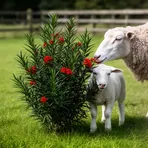
A low evergreen bush with narrow leaves and small red flowers that is poisonous to young sheep
Surface Forms
Morphology
kalmia + angustifolia
This is a Latin binomial (scientific) name: the specific epithet 'angustifolia' is not an ordinary English word and is listed as not found in the dictionary, so a B1 learner who only knows 'kalmia' would not be able to infer the full meaning. Scientific Latin epithets require botanical or Latin knowledge (e.g., 'narrow‑leaved') rather than regular English composition patterns, making the expression unpredictable for average learners.
Etymology
Kalmia angustifolia comes from the 1700s plant collector Pehr Kalm, so Kalmia comes from his name, and from the Latin word angustifolia meaning 'narrow leaves'. So, the name tells you the shrub was named after Kalm and that it has thin leaves, which helps you remember the plant.

