

Jupiter Fulminator
- noun
- /ˈdʒuːpɪtər ˌfʌlmɪˈneɪtər/
- Archaic
- In Roman mythology, Jupiter Fulminator is known for wielding lightning.
Examples
-
The ancient Romans prayed to Jupiter Fulminator during thunderstorms to protect their crops.
-
The temple of Jupiter Fulminator was a significant site in ancient Rome.
-
A temple was dedicated to Jupiter Fulminator following a miraculous deliverance by lightning.
-
The poet described the wrath of Jupiter Fulminator in vivid, electrifying terms.
-
The ancient Romans prayed to Jupiter Fulminator during thunderstorms, believing he would send lightning to protect their crops.
-
A temple was built in honor of Jupiter Fulminator, the god known for his thunderous might and lightning.
-
In their stories, the power of Jupiter Fulminator was often depicted as fierce, with lightning striking down from the heavens.
Synonyms

 21
4.5
21
4.5

The main god in ancient Rome who rules the sky and throws thunderbolts
 1
9.9
1
9.9
A name for the god Zeus or Jupiter who brings thunder

A title for the Roman god Jupiter as the bringer of lightning
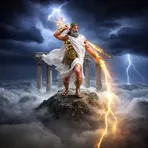
A title for the Roman god Jupiter who throws lightning bolts
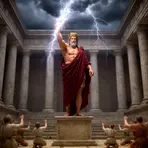
A title for the Roman god showing him as the bringer of thunder

The main title of the Roman god Jupiter that shows he is the greatest god in the Roman Empire

A name for the Roman god Jupiter used when people pray for rain

A name for the Roman god Jupiter who protects oaths and promises
Surface Forms
Morphology
Jupiter + Fulminator
The phrase is compositionally a name + agent noun: 'Jupiter' plus an agentive form 'Fulminator' (from Latin fulmin-, lightning, + -ator), so the overall sense 'Jupiter as bringer/hurler of lightning' can be inferred from the parts. However, the element 'Fulminator' is rare/lexicalized and based on an archaic Latin root and an unfamiliar suffix, so a B1 learner who knows 'Jupiter' but not the Latin-derived morphemes may not reliably derive the exact meaning.
Etymology
Jupiter Fulminator was a Roman title that pictures the god Jupiter as the one who throws 'lightning'. People imagined him sending bright bolts from the sky, so the name came to mean 'the bringer of lightning'.