
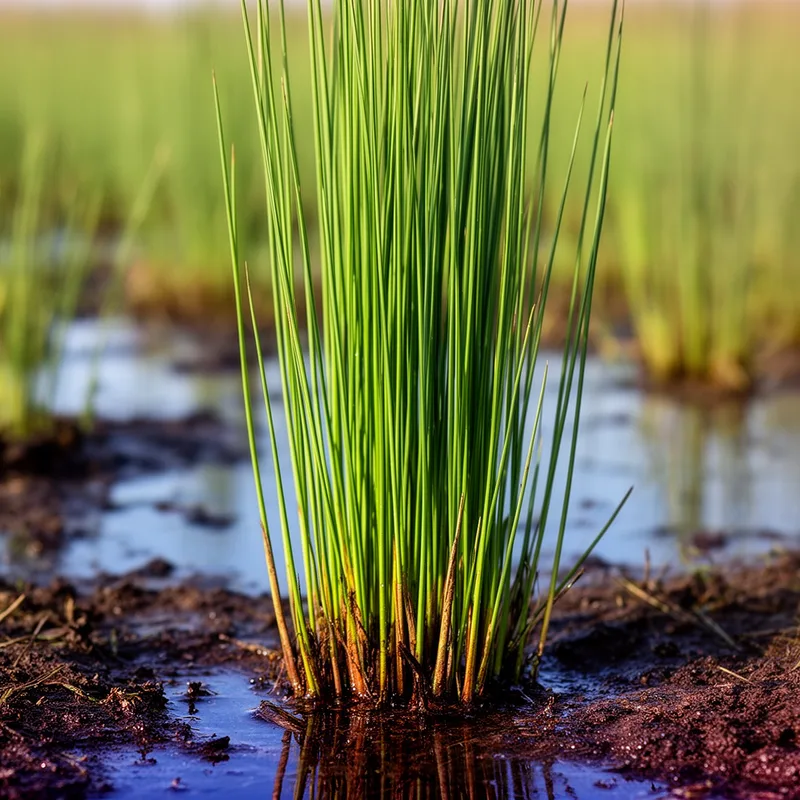
Juncus inflexus
- noun
- Specialized
- Many gardeners appreciate Juncus inflexus for its graceful, upright stems and ability to thrive in damp soils.
Examples
-
The pond's edges were lined with Juncus inflexus, swaying gently in the breeze.
-
Many birds nest among the Juncus inflexus in marshes.
-
Ecologists identified Juncus inflexus as a key species in the wetland restoration project.
-
The Juncus inflexus thrives in wetland areas.
-
Ecologists identified Juncus inflexus as a key species in the wetland restoration project.
-
Many gardeners appreciate Juncus inflexus for its graceful, upright stems and ability to thrive in damp soils.
-
The pond's edges were lined with Juncus inflexus, swaying gently in the breeze.
Synonyms
A tall wild plant with stiff round stems that grows in wet places
Surface Forms
Morphology
Juncus + inflexus
This is a Latin binomial (genus + species) functioning as a scientific proper name rather than a semantically compositional phrase. Even if a learner knows 'Juncus' as a marsh plant, the species epithet 'inflexus' is a specialized/Latin term (missing from the learner dictionary) and the label does not transparently convey the detailed meaning 'a tall, slender rush found in wetlands' to a B1 learner. Taxonomic names are language- and domain-specific and therefore unpredictable for general learners.
Etymology
Juncus inflexus comes from simple Latin words: Juncus meant a 'rush', a tall thin wetland plant, and inflexus means 'bent inward'. Think of a tall rush whose stems bend in a little, and that picture explains the name and helps you remember this wetland plant today.

