
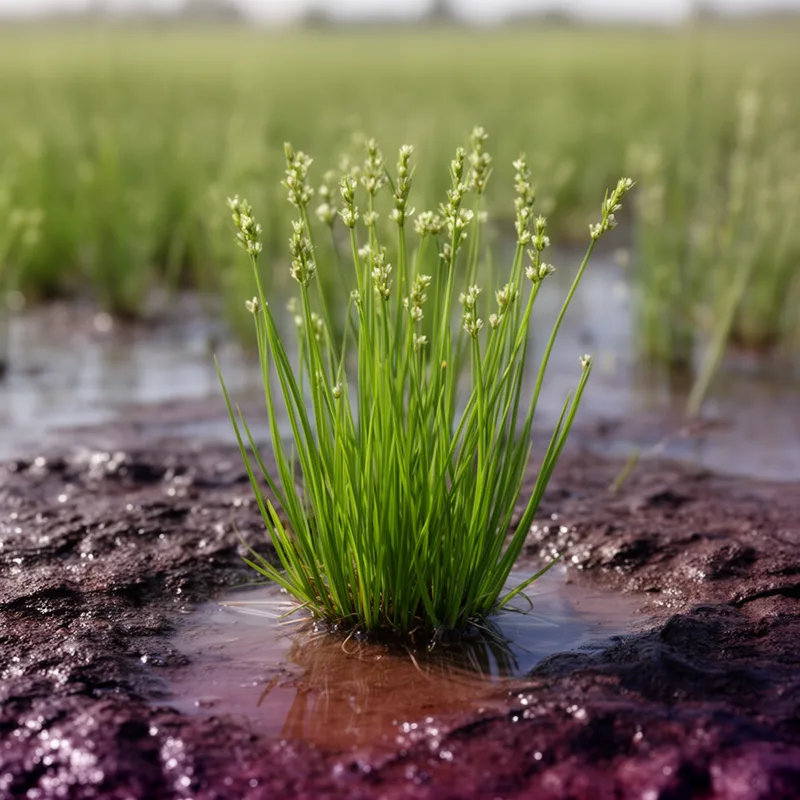
Juncus bufonius
- noun
- Specialized
- The field guide lists Juncus bufonius as common in marshy environments across several continents.
Examples
-
You can identify Juncus bufonius by its slender stems and tiny flowers.
-
Juncus bufonius thrives in wet ditches and muddy meadows during the summer.
-
The Juncus bufonius thrives in wetland areas.
-
In my garden, I planted Juncus bufonius for its unique appearance.
-
Juncus bufonius grows abundantly in the shallow waters of wetlands and ponds.
-
During nature walks, we often observe Juncus bufonius along the edges of marshes.
-
The slender leaves of Juncus bufonius provide habitat for various small insects in damp areas.
Synonyms
A small grass-like plant that grows in wet, low ground
Surface Forms
Morphology
Juncus + bufonius
The form is a Latin binomial: knowing 'Juncus' (a tufted marsh plant genus) lets a learner infer this labels a species of Juncus (i.e. a type of rush), but the specific epithet 'bufonius' is not a productive English word and has no dictionary gloss here. Scientific names are formulaic across languages, so some basic inference (‘‘a Juncus species/plant'') is possible, but the detailed meaning (low‑growing annual, habitat, distribution) is not derivable from the parts for a B1 learner.
Etymology
Juncus bufonius likely comes from Latin words juncus meaning 'rush' and bufonius meaning 'toad'. The name gives a picture of a small rush that grows in wet places where toads live, so it now refers to a low plant found in damp ground.

