
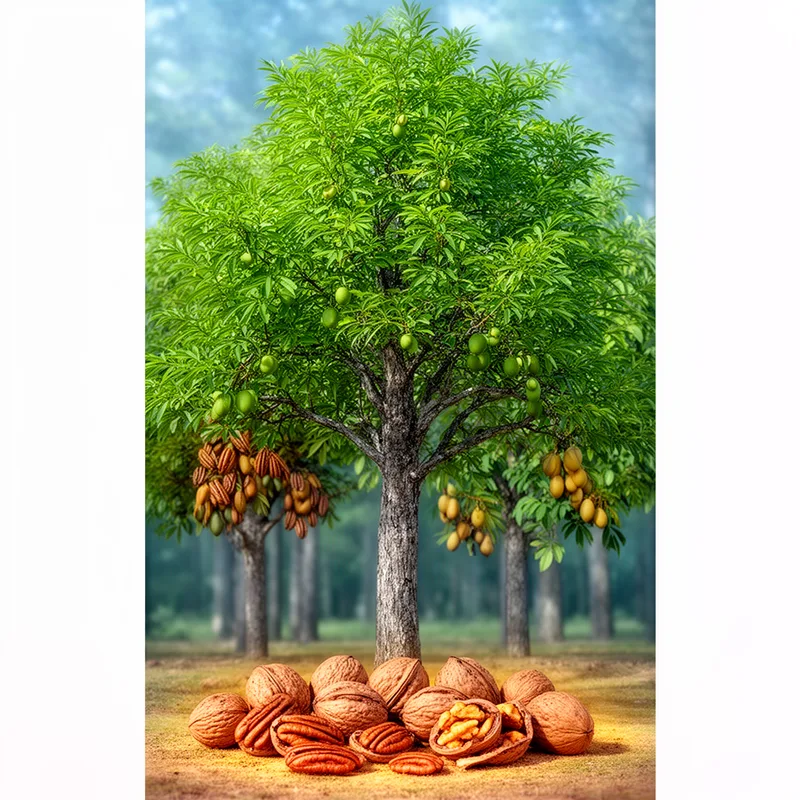
Juglandaceae
- noun
- /ˌdʒʌɡlənˈeɪʃiˌi/
- Specialized
- Many species in the Juglandaceae are prized for both their timber and their edible nuts.
Examples
-
Botanists classify hickory trees within the Juglandaceae family due to their similar nut structure.
-
The Juglandaceae family includes economically important trees such as the walnut and the pecan.
-
The Juglandaceae family includes many popular nut trees.
-
Did you know that Juglandaceae trees can live for over a hundred years?
-
The trees in the Juglandaceae family produce delicious nuts like walnuts and pecans.
-
Farmers often cultivate Juglandaceae trees for their valuable and nutritious nuts.
-
The leaves of Juglandaceae trees, such as hickories, provide shade and enhance the beauty of parks.
Synonyms
A group of trees that includes walnuts, pecans, and hickories and makes edible nuts
Surface Forms
Etymology
Juglandaceae comes from the Latin Juglans 'walnut' and the plant ending -aceae 'family'. A helpful way to remember it is to think of Juglans as 'Jupiter's acorn', an old story, so the word simply means the 'walnut family', the group of trees like walnut, hickory, and pecan that make edible nuts.

