
Jewry
 6
8.4

- noun
- /ˈdʒuəri/
- According to Benjamin Jacobs, Holland's chief rabbi, "the future for Dutch Jewry is moving to Israel."
- European Jewry
- Soviet Jewry
- American Jewry
Examples
-
That year scale of Jewry in America is a quantum leap from what it is in any European country.
-
American Jewish leaders, for whom Soviet Jewry was not a pressing issue, tended to agree.
Academic text (2011) -
The story of modern Jewry reads like a book in the Bible.
Academic text (2006) -
In time, the Soviet Jewry struggle attracted individuals from every part of American Jewish life.
Academic text (2011) -
The study of European Jewry offers an especially fertile place for such research.
Academic text (1999) -
In both the United States and the USSR, the struggle for Soviet Jewry began with memories of the Holocaust.
Academic text (2011) -
Herein lies a debt to Orthodox Jewry in America: they are keeping the traditions of Jewish cooking alive.
Academic text (2001) -
The Pollard affair placed American Jewry in a bad light and led to serious emotional stress and insecurity.
Academic text (1996) -
The business was booming, with waiting lists of Ohio Jewry clamoring for available slots.
Fiction book (1996) -
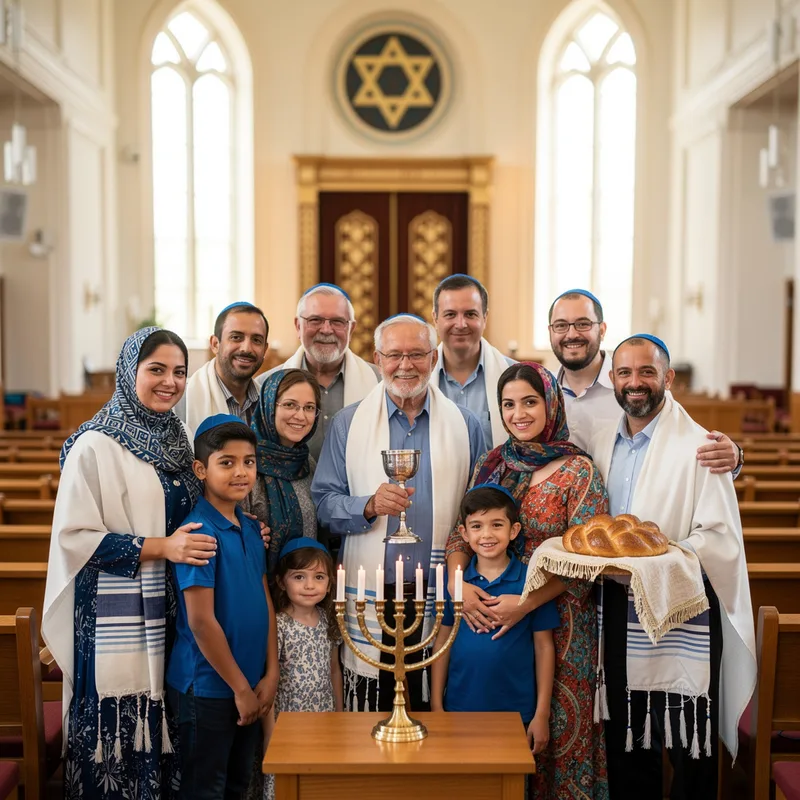
The festival celebrated the rich traditions of Jewry and brought together families from across the community.
Surface Forms
Morphology
Etymology
The word Jewry is made from Jew plus the ending -ry, which turns a word into a group, so it means the Jewish people as a whole. Jew originally meant a person from 'Judah', a region and tribe long ago, which is why Jewry refers to that whole community.