
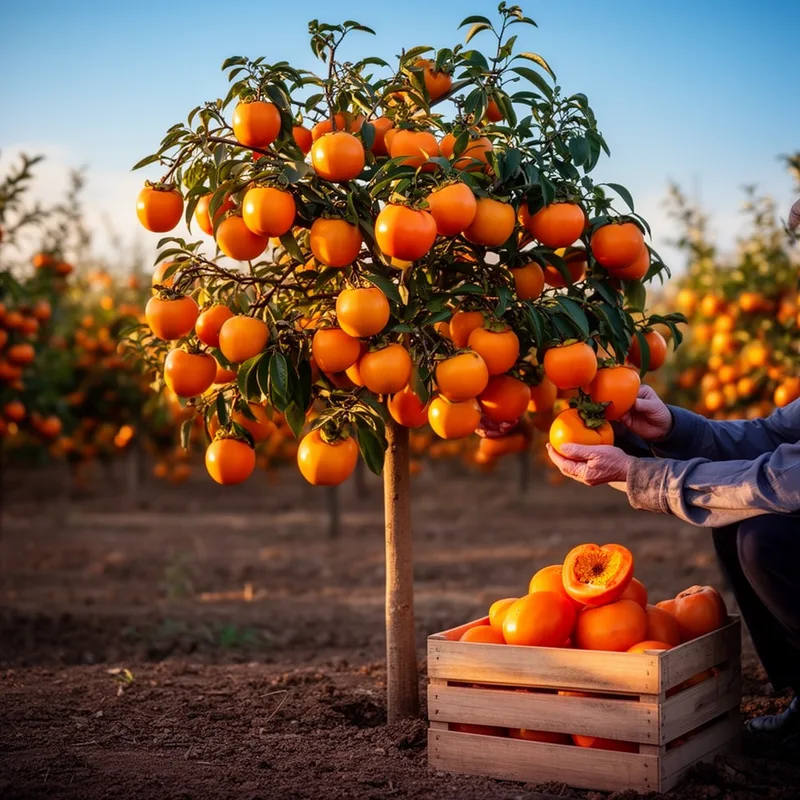
Japanese persimmon
- noun
- /ˌdʒæpəˈniːz pərˈsɪmən/
- The Japanese persimmon is prized for its large, sweet fruit and ornamental value.
Examples
-
Have you tried Japanese persimmons?
-
I love eating Japanese persimmons in the fall.
-
Farmers harvested the ripe Japanese persimmons late in the autumn for market.
-
My grandmother makes a delicious jam from Japanese persimmon each year.
-
The Japanese persimmon is known for its sweet, flavorful flesh when fully ripe.
-
In East Asia, many people enjoy picking fresh persimmons from local trees during the autumn harvest.
-
When the persimmons are ripe, they turn a vibrant orange color, attracting many fruit lovers.
Synonyms

 4
6.7
4
6.7

A tree that grows in warm places and makes sweet orange fruit
 1
6.4
1
6.4
A tree that grows sweet orange fruit eaten in autumn


 1
9.9
1
9.9
A small Asian tree that produces large orange fruit you can eat

A small Asian tree that produces large orange fruit called persimmons
Surface Forms
Morphology
The meaning is directly compositional: the adjective 'Japanese' specifies origin/association and 'persimmon' names the fruit/tree, so a B1 learner who knows both words can infer it refers to a persimmon from Japan or a Japanese variety. This adjective+noun pattern is a common, cross-linguistic way to mark origin, making the expression transparent rather than idiomatic.
Etymology
The name Japanese persimmon simply names a type of persimmon that comes from Japan and is often called kaki, a bright orange fruit. One popular story says the word persimmon comes from an old Native American word for a fruit that becomes sweet when ripe, so the name helps you remember it means 'a small tree with large orange edible fruit'.