
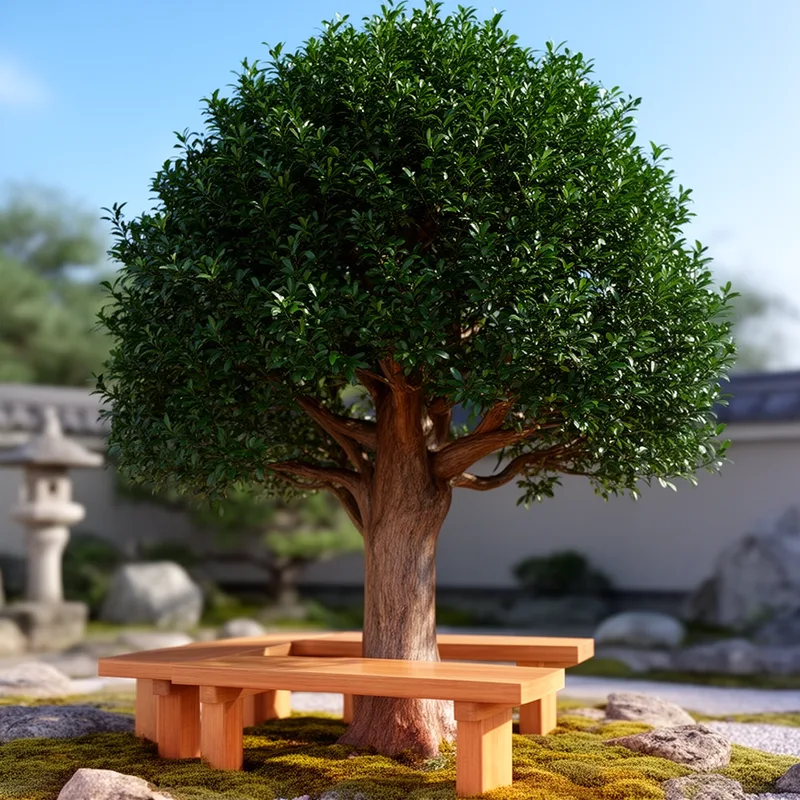
Japanese oak
- noun
- The Japanese oak is valued for its strong wood and attractive foliage.
Examples
-
Many gardens feature a Japanese oak as an ornamental tree.
-
Many Japanese oaks can be found in parks.
-
The leaves of the Japanese oak remain green throughout the year.
-
The Japanese oak is known for its beautiful wood.
-
Many gardens feature a Japanese oak as an ornamental tree.
-
The Japanese oak is valued for its strong wood and attractive foliage.
-
The leaves of the Japanese oak remain green throughout the year.
Synonyms
A type of oak tree from East Asia, including Japan and Korea

An oak tree from Japan with light, fine-grained wood used for timber
Surface Forms
Morphology
The meaning 'a type of oak tree native to Japan and China' is directly and transparently derived from combining 'Japanese' (of or connected with Japan) with 'oak' (a species of tree). This adjective + noun composition indicating origin or variety is cross-linguistically common and readily comprehensible to a B1 learner who knows both constituent words.
Etymology
Japanese oak is a literal name: Japanese shows it comes from Japan (and nearby China) and oak is the strong, broad-leaved tree. So the name means 'an oak tree from Japan and nearby China, often used for fine wood and in gardens'.

