

Japanese millet
- noun
- /ˈdʒæpəˌniːz ˈmɪlɪt/
- Farmers often plant Japanese millet as a summer crop for both grain and animal feed.
Examples
-
The introduction of Japanese millet helped diversify local agriculture in the region.
-
I bought some Japanese millet for my birds.
-
Waterfowl are attracted to wetlands where Japanese millet is grown.
-
Have you ever tried Japanese millet in your diet?
-
Farmers often plant Japanese millet as a summer crop to provide food for both humans and livestock.
-
The introduction of Japanese millet improved the forage options available for farmers in the region.
-
In Japan, Japanese millet is commonly used in traditional dishes and as animal feed.
Synonyms

A rough grass people grow each year for its seeds and animal feed
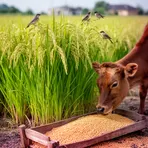
A grass grown for its seeds and animal feed

A grass grown in Asia for its small edible seeds and for animal feed

A rough annual grass grown for edible seeds, animal feed, and wildlife food
Surface Forms
Morphology
The compound is transparently compositional: 'Japanese' (of or related to Japan) simply modifies 'millet' (a small-seeded grass), so the phrase denotes a millet associated with Japan. This nationality + noun pattern is cross-linguistically common and easily predictable for a B1 learner who knows both constituents.
Etymology
Japanese millet may come from the fact that the word Japanese names the country and millet is a small grain plant first grown or used there. It is a crop farmers grow for 'food' and 'animal feed', so the name tells you both where it comes from and what it is.

