

Japanese barberry
- noun
- /ˈdʒæpəˌniːz ˈbɑːrbəri/
 :
agracejo japonés
:
agracejo japonés
- The Japanese barberry is a popular choice for garden hedges.
Examples
-
Many landscapers use Japanese barberries for their vibrant color.
-
Many landscapers recommend Japanese barberry for its hardiness and attractive shape.
-
Birds are often drawn to the red berries of the Japanese barberry.
-
The Japanese barberry in our garden provides bright color in the fall.
-
The garden was filled with vibrant colors, thanks to the beautiful Japanese barberry shrubs lining the pathway.
-
She planted Japanese barberry around the fence to create a colorful and low-maintenance hedge.
-
In autumn, the Japanese barberry showcases its striking red berries, adding splashes of color to the landscape.
Synonyms
 1
8.2
1
8.2

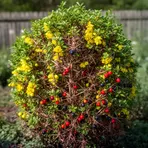
A thorny bush with yellow flowers and small red or blue berries

A small bush from eastern Asia with sharp thorns and red berries, often used for hedges
How Ornamental

Surface Forms
Morphology
The phrase names a type/variety of barberry linked to Japan and its meaning is directly inferable from 'Japanese' (of Japan) + 'barberry' (a shrub). This nationality + noun naming pattern is cross-linguistically common and follows standard compositional rules, so a B1 learner who knows both constituents will understand it.
Etymology
Japanese barberry comes from its origin and how it looks: Japanese shows it came from Japan and barberry names a small, thorny bush with bright red berries. So the name tells gardeners it is a hardy shrub often used for 'hedges' and garden colour.