
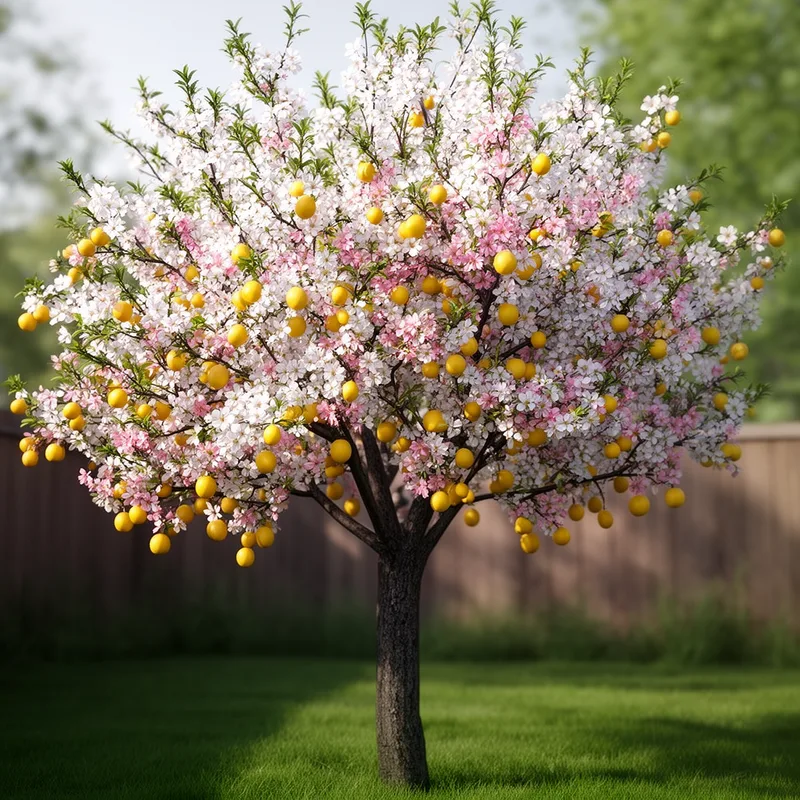
Japanese apricot
- noun
- She planted a Japanese apricot in her backyard to enjoy its fragrant blossoms every year.
Examples
-
The Japanese apricot blossoms early in spring, brightening gardens with its delicate pink flowers.
-
The fruit of the Japanese apricot is often used to make traditional East Asian preserves.
-
The Japanese apricot tree blooms beautifully in spring.
-
I planted a Japanese apricot in my garden last year.
-
She planted a Japanese apricot in her backyard to enjoy its fragrant blossoms every year.
-
The Japanese apricot blossoms early in spring, brightening gardens with its delicate pink flowers.
-
The fruit of the Japanese apricot is often used to make traditional East Asian preserves.
Synonyms
 11
9.9
11
9.9

A small Japanese tree with white or pink flowers and small yellow fruit often grown in gardens

A tree from East Asia with fragrant pink or white blossoms and small yellow fruits like plums
How Ornamental
2
3.9

- South African
21
1.0
Surface Forms
Morphology
This is a straightforward adjective+noun composition: a B1 learner who knows 'Japanese' (from Japan) and 'apricot' (the fruit/tree) will readily infer it refers to an apricot (or apricot-like) tree/fruit associated with Japan. The naming follows common cross-linguistic patterns for plant names, so the meaning is directly derivable from the constituents.
Etymology
Japanese apricot may come from how English speakers saw a tree in Japan whose small fruit and pretty blossoms looked like an apricot, so they called it a Japanese apricot. That's why the name now means a fragrant flowering tree from East Asia rather than the common apricot fruit.