

Japanese andromeda
- noun
- /ˌdʒæpəˈniːz ˌændrəˈmoʊdə/
- We planted a Japanese andromeda because it stays green all year and thrives in shade.
Examples
-
The Japanese andromeda in her garden was covered in fragrant white blossoms in early spring.
-
The nursery recommended Japanese andromeda for its resistance to deer and attractive foliage.
-
The Japanese andromeda blooms beautifully in spring.
-
Many gardeners love the Japanese andromeda for its glossy leaves.
-
The Japanese andromeda in her garden was covered in fragrant white blossoms in early spring.
-
The nursery recommended Japanese andromeda for its resistance to deer and attractive foliage.
-
We planted a Japanese andromeda because it stays green all year and thrives in shade.
Synonyms
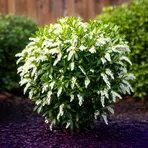
A small evergreen bush with shiny leaves and drooping clusters of white flowers often grown in gardens

An evergreen shrub with shiny leaves and hanging sweet-smelling white flowers
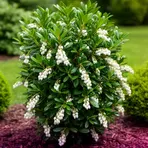
A small evergreen bush with glossy leaves and clusters of small white flowers
How Ornamental


Surface Forms
Morphology
The phrase is fully compositional: the adjective 'Japanese' specifies the origin or variety of the noun 'andromeda' (a shrub). A B1 learner who knows both words would readily infer it denotes an andromeda shrub associated with Japan, because adjective+noun modification is a straightforward, cross-linguistic pattern.
Etymology
Japanese andromeda may come from the Greek myth of Andromeda, because the shrub's hanging groups of white flowers looked to people like a necklace or a flowing dress. So, because the plant comes from Japan and has that picture, Japanese andromeda now means an 'evergreen garden shrub with hanging white flowers'.