
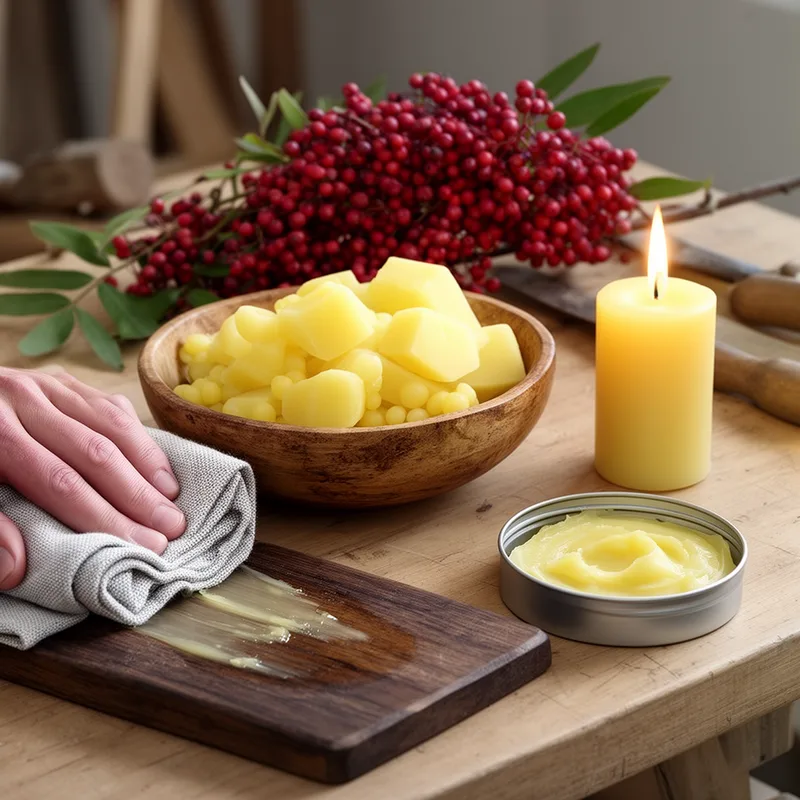
Japan wax
- noun
- Archaic
 :
cera de Japón
:
cera de Japón
- The artisan used Japan wax to finish the wooden sculpture.
Examples
-
Traditional furniture polish often contains Japan wax for its smooth finish.
-
You can find Japan wax listed as an ingredient in some specialty crayons.
-
Candlemakers sometimes use Japan wax for its excellent burning qualities.
-
Many manufacturers prefer Japan wax for its durability.
-
Candlemakers sometimes use Japan wax for its excellent burning qualities.
-
Traditional furniture polish often contains Japan wax for its smooth finish.
-
You can find Japan wax listed as an ingredient in some specialty crayons.
Synonyms

 187
2.8
187
2.8

A solid natural material that bees make, used to make candles and polish things
A yellowish wax from the berries of some sumac trees used in polishes and candles
A firm, oily material from plants used in polishes and cosmetics
Surface Forms
Morphology
Etymology
Japan wax probably comes from a simple, literal fact: people pressed the oily 'berries' of trees called sumac that grew in Japan to make a yellowish wax. Because this plant wax was used for candles and polish, the name Japan wax came to mean that wax product today.