
James Dewey Watson


 1
5.8
- proper noun
- /ˈdʒeɪmz ˈduːi ˈwɑːtən/
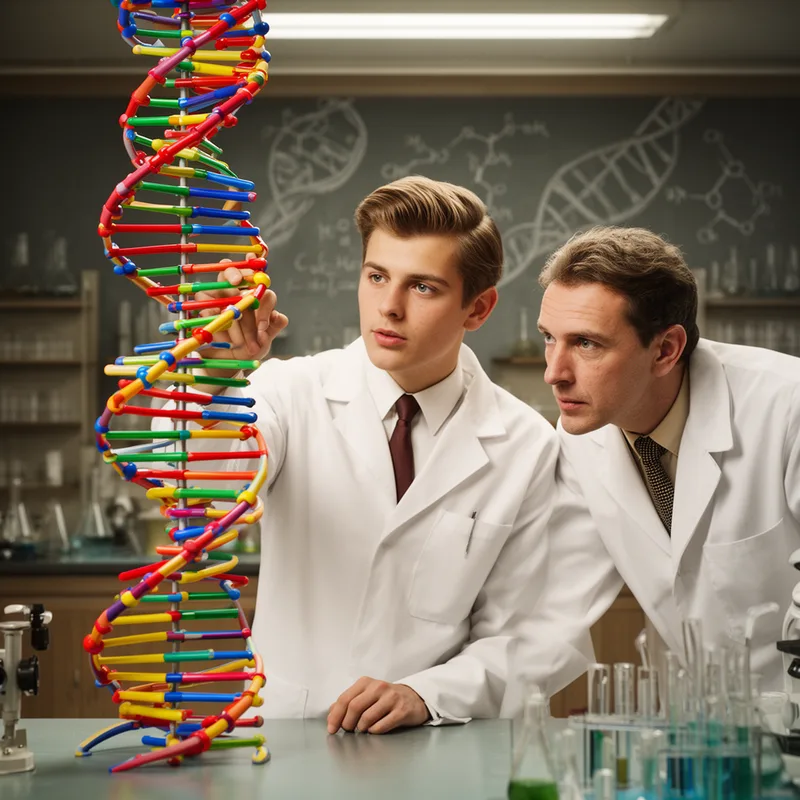
- Many biology textbooks credit James Dewey Watson and Francis Crick with the discovery of the DNA double helix.
Examples
-
James Dewey Watson was awarded the Nobel Prize in Physiology or Medicine in 1962.
-
James Dewey Watson is known for co-discovering the double helix structure of DNA with Francis Crick.
-
James Dewey Watson was awarded the Nobel Prize in Physiology or Medicine in 1962.
-
Few scientists have influenced genetics as profoundly as James Dewey Watson.
-
Did James Dewey Watson really discover the structure of DNA?
-
In 1962, James Dewey Watson received the Nobel Prize in Physiology or Medicine for his groundbreaking work.
-
James Dewey Watson has made significant contributions to the field of genetics throughout his career.
Surface Forms
Morphology
James + Dewey + Watson
This item is a personal name (a proper noun) referring to a specific individual; knowing the constituents 'James', 'Dewey' and 'Watson' as words or names does not let a learner infer the biographical meaning (American geneticist, co-discoverer of DNA). Proper names are arbitrary referents rather than compositional expressions, so a B1 learner who only knows the constituent words would not be able to derive the MWE's meaning.
Etymology
James Dewey Watson is an American scientist who, with Francis Crick, discovered DNA's twisted-ladder shape in 1953. They pictured DNA as a tiny 'twisted ladder', and that clear image is why his name is linked to the discovery of DNA and modern genetics.