
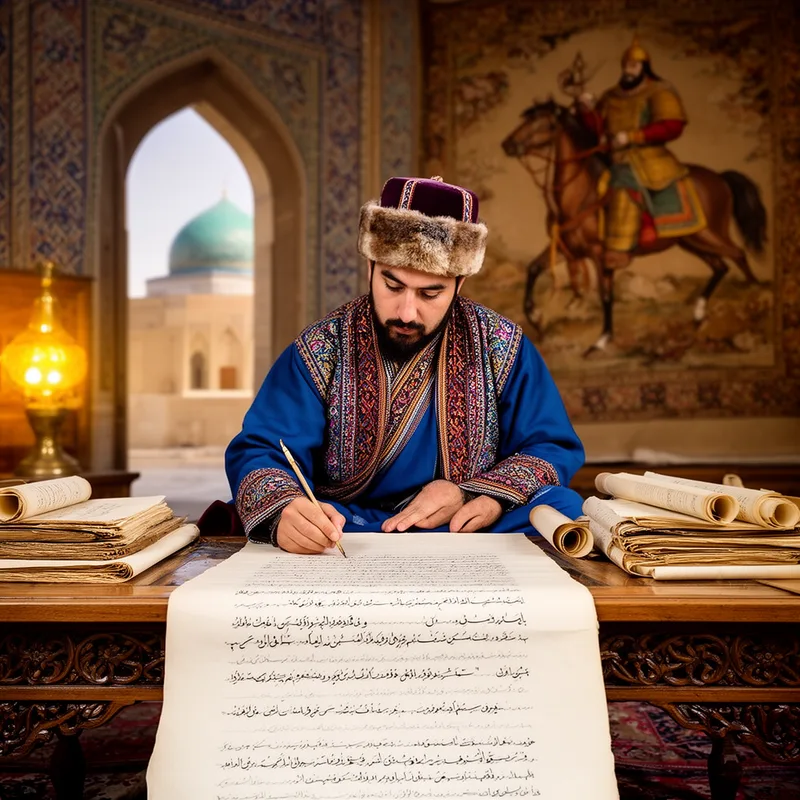
Jaghatai
- noun
- Literature
- The Jaghatai language served as a literary standard for many centuries.
Examples
-
Modern Uzbek has roots in Jaghatai, which influenced its vocabulary and grammar.
-
Much classical Central Asian poetry was written in Jaghatai.
-
The Jaghatai language has a rich literary tradition.
-
Many poets wrote in Jaghatai during the medieval period.
-
Much classical Central Asian poetry was written in Jaghatai.
-
The Jaghatai language served as a literary standard for many centuries.
-
Modern Uzbek has roots in Jaghatai, which influenced its vocabulary and grammar.
Synonyms

A written Turkic language of medieval Central Asia named after a son of Genghis Khan

A Turkic written language from Central Asia in the Middle Ages, named after Chagatai, a son of Genghis Khan

A written language used for books and poems in medieval Central Asia
A medieval written Turkic language from Central Asia used in regions once ruled by a son of Genghis Khan

A Turkic written language used across Central Asia from the 1400s to the early 1900s
Compounds
- Literature
A written Turkic language of medieval Central Asia named after a son of Genghis Khan
Surface Forms
Etymology
Jaghatai comes from the name of Genghis Khan's son Chagatai, so it originally meant 'Chagatai's language' and was used as a written Turkic language for books and poems long ago in Central Asia. That's why many modern Central Asian languages, like Uzbek, still have words and grammar from Jaghatai.

