
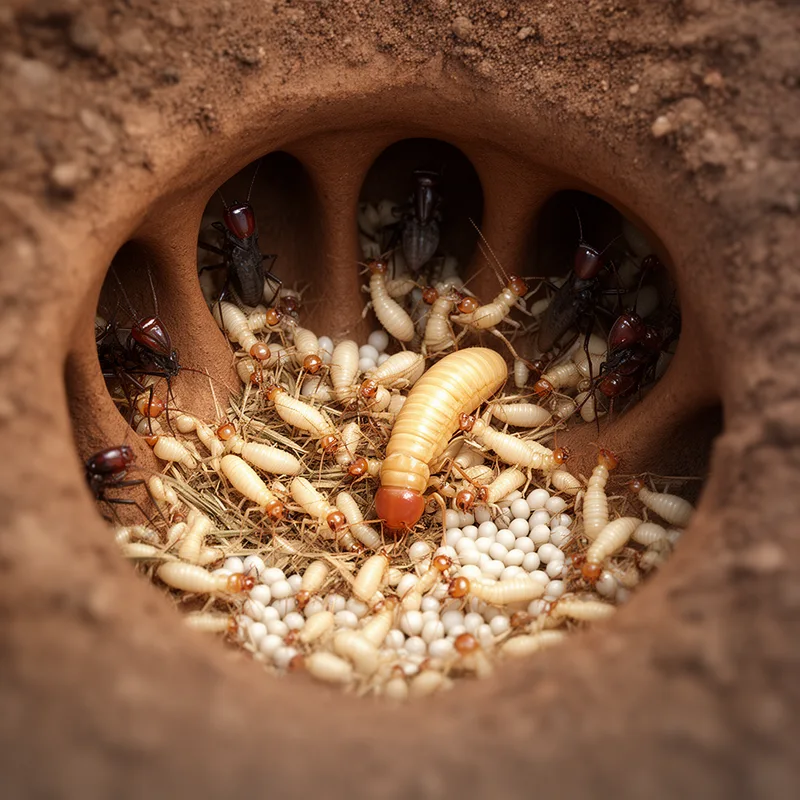
Isoptera
- noun
- /ˌaɪsəˈptɛrə/
- Archaic
- The class learned that termites belong to the order Isoptera, which defines their social structure.
Examples
-
One termite (Isoptera: Rhinotermitidae) and one Orthopteran (Gryllotalpidae) were represented.
Academic text (2010) -
We classified 71 species as phloem or wood borers, which included 63 beetle species, along with five Lepidoptera, two Hymenoptera, and one termite (Isoptera).
Academic text (2010) -
In studying insect behavior, the researchers focused on species from the order Isoptera to understand their role in ecosystems.
-
The pest control expert explained that Isoptera are important decomposers in nature, breaking down dead plant material.
Synonyms
A group of insects that live together in nests, including termites
Compounds
Surface Forms
Morphology
Isoptera = iso + ptera
A technical taxonomic name formed from Greek combining forms ('iso-' + '-ptera') that are not familiar or productive for average learners, so the meaning is not transparently derivable.
Etymology
Isoptera comes from old Greek parts iso- meaning 'equal' and -ptera meaning 'wing'. Because termites have two pairs of wings that are the same size, the name means 'equal wings' and was used for the group of insects we now call termites.

