
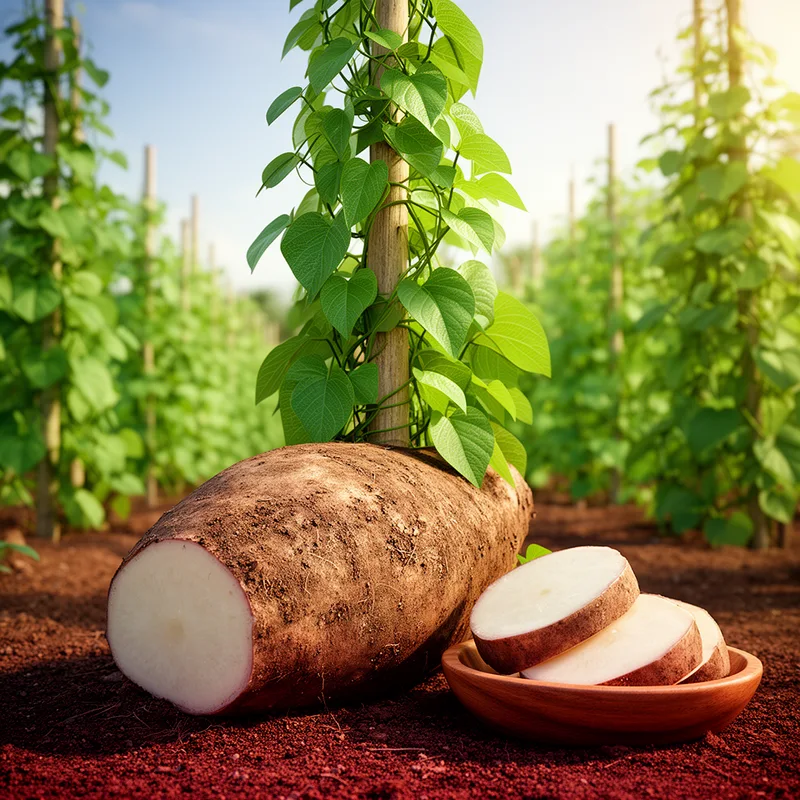
Ipomoea panurata
- noun
- Specialized
- Ipomoea panurata is sometimes mistaken for the true sweet potato due to its similar root.
Examples
-
The giant tuber of Ipomoea panurata can be an important food source in local diets.
-
Farmers cultivate Ipomoea panurata for its large roots.
-
Botanists have recently discovered a wild population of Ipomoea panurata in the Amazon basin.
-
The Ipomoea panurata is often found in tropical regions.
-
Ipomoea panurata, known for its large starchy root, is often used in traditional dishes across tropical regions.
-
Many people confuse Ipomoea panurata with sweet potatoes because of its similar appearance and flavor.
-
The roots of Ipomoea panurata are harvested for their nutritional value, providing an essential food source in various communities.
Synonyms

A tropical climbing plant with a large starchy root often harvested for food

A tropical plant with a very large root full of starch like a sweet potato

A tropical plant that grows along the ground or climbs and has a large starchy root used as food
A climbing tropical plant with a large root used for food and related to the sweet potato

A tropical plant that grows along the ground or climbs and has a large root people eat
Surface Forms
Morphology
Ipomoea + panurata
The genus name 'Ipomoea' clearly indicates a plant (flowering-plant genus), so a learner who knows the constituents would recognize this as a species name and infer it's a plant. However, the specific epithet 'panurata' provides no transparent lexical meaning (not found in dictionary) and the detailed traits (tropical creeping/climbing perennial with a starchy root) are not derivable from the parts. Because the genus gives partial cueing but the full species meaning is taxonomic and not compositional, the expression is only partially transparent.
Etymology
Ipomoea panurata may come from old Greek words meaning 'worm-like' and 'broad', a simple picture of its twining stems (like a worm) and its very large, wide root. That's why this climbing plant is known for a big starchy tuber and is sometimes confused with the 'sweet potato'.

